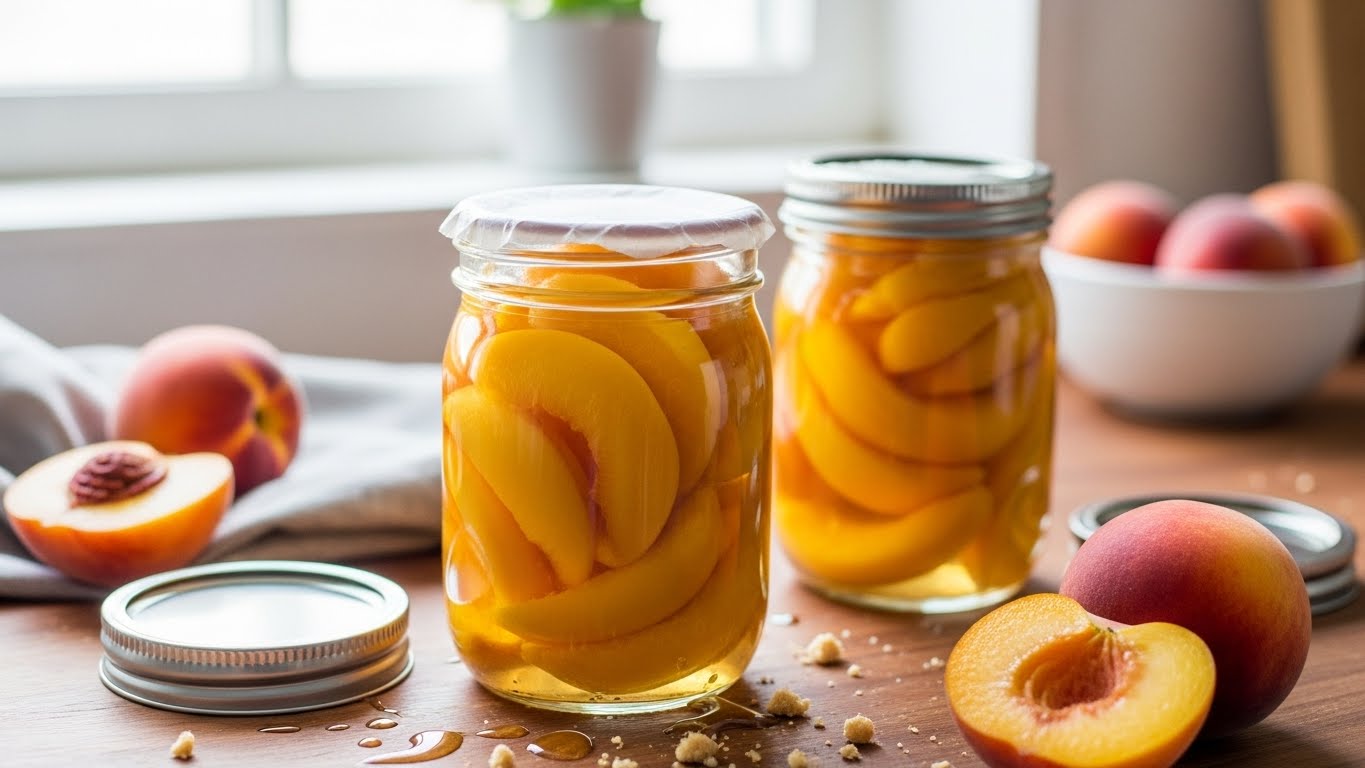
Best Canning Peaches Recipe for Sweet, Juicy Jars All Year
Ever bite into a peach so juicy it drips down your wrist and think, “I need this flavor forever”? Same here. That exact thought pushed me into learning a proper canning peaches recipe, and honestly, it changed my pantry game. Fresh peaches don’t last long, and store-bought canned ones rarely taste like summer. So why not lock that sweetness in a jar yourself?
I still remember my first canning day. I overbought peaches, underestimated the mess, and ended up sticky and tired but proud. Canning peaches feels old-school in the best way. You work with your hands, you slow down, and you end up with jars that feel like little trophies.
Let’s walk through this together, no stress and no perfection required.

Why Canning Peaches Is Totally Worth It
Canning peaches gives you control. You choose the sweetness, the texture, and the quality. You also avoid mystery syrups and mushy fruit, which feels like a win.
I love opening a jar in winter and tasting summer again. That moment alone justifies the effort. Ever tried canned peaches on pancakes in January? Life-changing.
Canning peaches also:
- Reduces food waste
- Saves money during peach season
- Creates shelf-stable fruit for months
IMO, that’s a solid payoff.
Choosing the Right Peaches for Canning
Freestone vs Clingstone Peaches
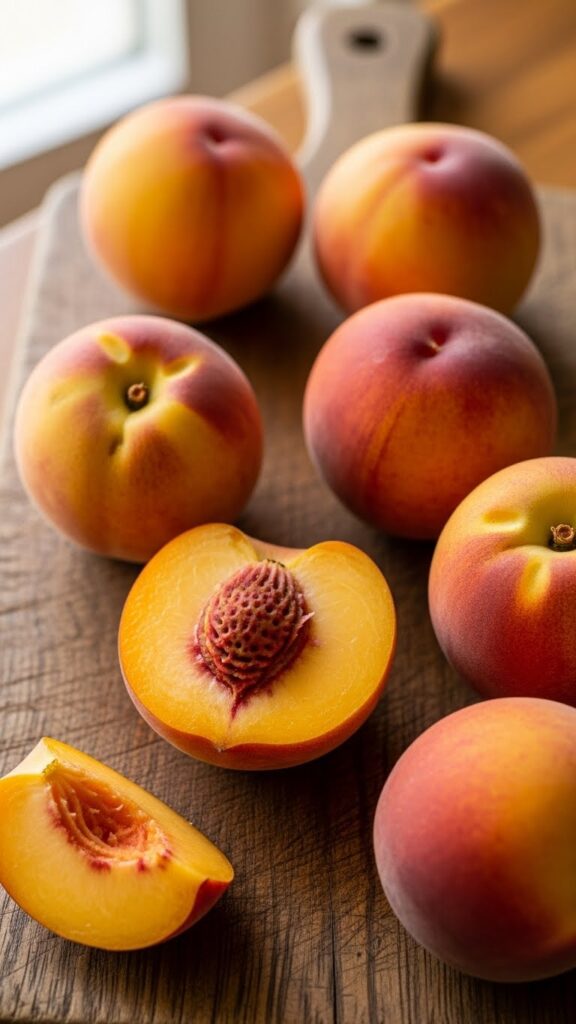
I always pick freestone peaches when I can. The pit pops out easily, which saves time and frustration.
Clingstone peaches still work, but they fight back. I don’t love wrestling fruit with a knife.
Ripeness Matters More Than You Think
I use peaches that feel ripe but firm. Overripe peaches turn mushy after canning. Underripe peaches taste bland and stiff.
Look for peaches that:
- Smell sweet
- Give slightly when pressed
- Show no bruises or mold
Ever canned peaches that tasted flat? Ripeness usually caused that.
What You’ll Need Before You Start
I like to set everything out first. It keeps me calm and prevents mid-process chaos.
Equipment Checklist
You’ll need:
- Water bath canner or large stockpot
- Canning jars with lids and bands
- Jar lifter
- Wide-mouth funnel
- Clean towels
You don’t need fancy gear. I started with basic tools and upgraded later.
Ingredients List
For this canning peaches recipe, grab:
- Fresh peaches
- Sugar (optional but recommended)
- Water
- Lemon juice or citric acid
That’s it. Simple ingredients, real flavor.
Preparing Peaches Without Losing Your Mind
Peeling Peaches the Easy Way
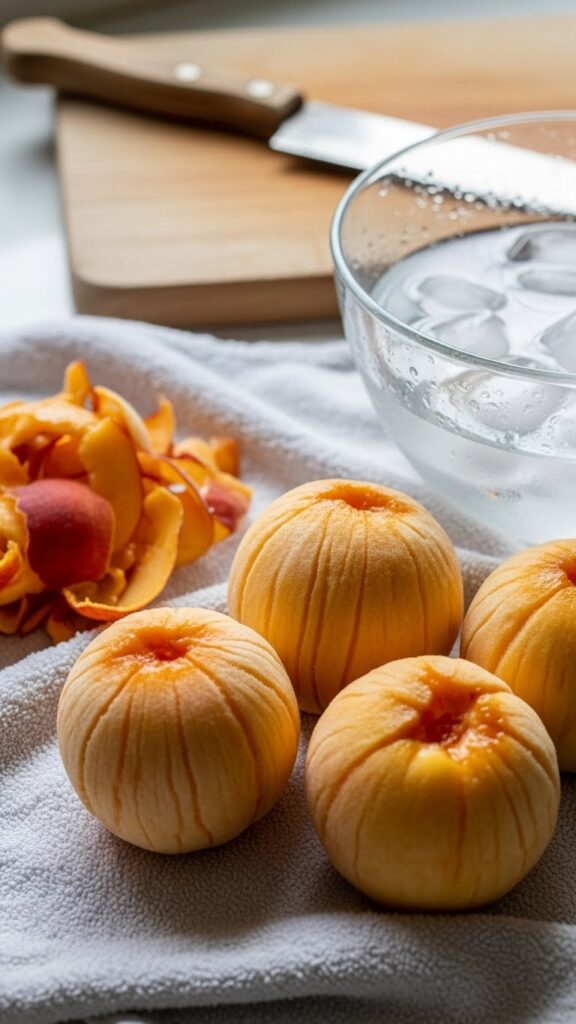
I always blanch peaches. This step saves time and nerves.
Here’s how I do it:
- Score an X on the bottom of each peach.
- Boil peaches for 30–60 seconds.
- Transfer them to ice water.
- Slip off the skins with your fingers.
The skins slide off like magic. Why fight nature?
Slicing and Treating Peaches
I slice peaches in halves or quarters. I remove the pit and drop slices into acidulated water.
I mix water with lemon juice to:
- Prevent browning
- Maintain bright color
FYI, browning doesn’t ruin safety, but it ruins vibes 🙂
Syrup Options Explained (No Guesswork)
You control sweetness here, which I love.
Light, Medium, or Heavy Syrup?
I usually choose light syrup. It preserves flavor without drowning the fruit.
Basic syrup ratios:
- Light syrup: 1 cup sugar + 4 cups water
- Medium syrup: 2 cups sugar + 4 cups water
- Heavy syrup: 3 cups sugar + 4 cups water
You can also use plain water or juice. I tried juice once, and it overpowered the peaches.
Step-by-Step Canning Peaches Recipe
Heating the Peaches
I heat peach slices gently in the syrup. This step helps remove air and improves texture.
I simmer peaches for about 5 minutes. I don’t boil them hard.
Filling the Jars
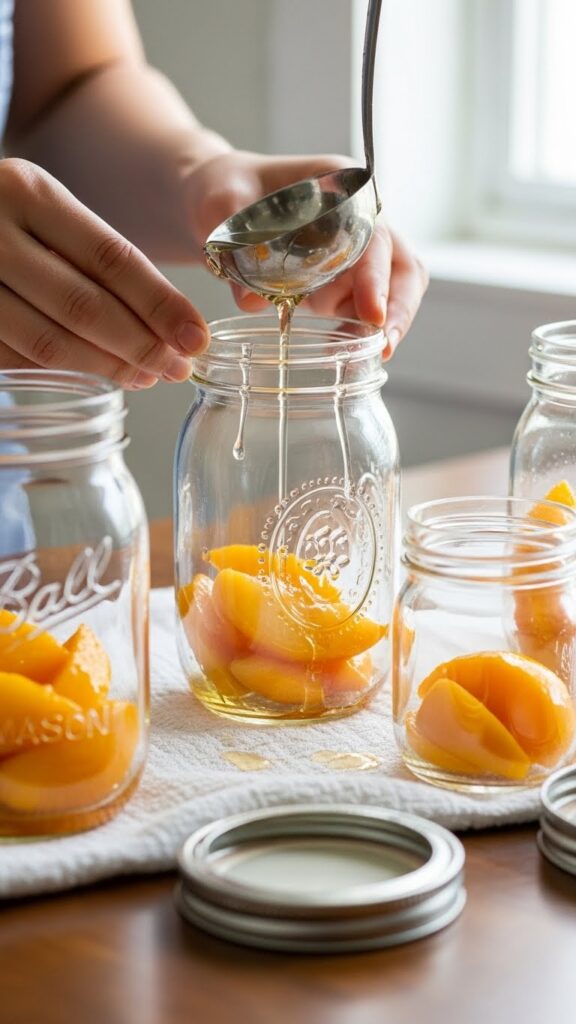
I pack hot peaches into hot jars. I leave ½ inch headspace at the top.
Then I:
- Pour hot syrup over peaches
- Remove air bubbles with a spatula
- Wipe jar rims clean
- Place lids and bands fingertip-tight
Clean rims matter more than people admit.
Processing Jars Safely
Water Bath Canning Basics
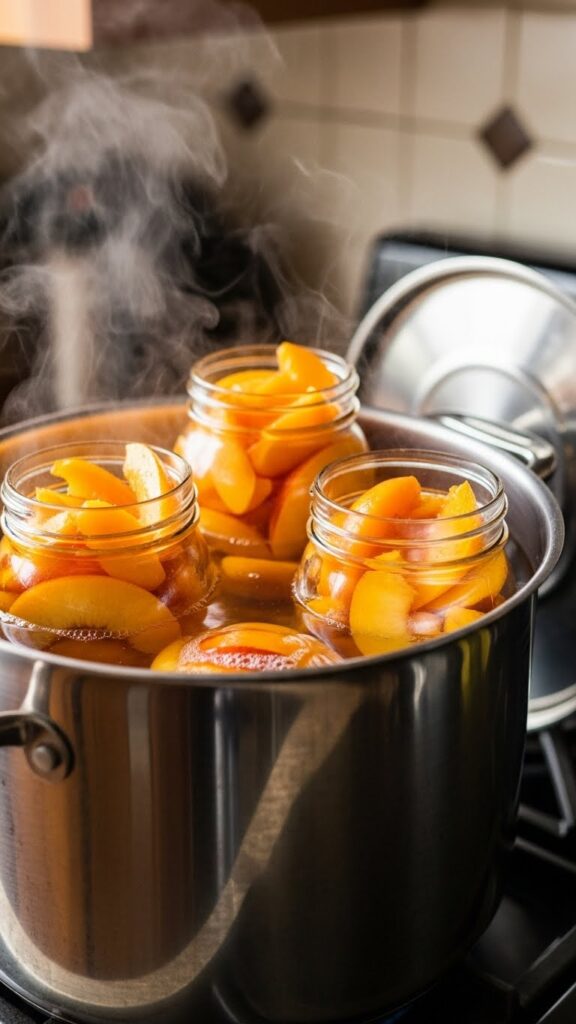
I lower jars into boiling water using a jar lifter. Water covers jars by at least one inch.
Processing times:
- Pints: 20 minutes
- Quarts: 25 minutes
I adjust for altitude when needed. Don’t skip that part.
Cooling and Checking Seals
I remove jars and let them cool untouched for 12–24 hours. I listen for that satisfying “pop.”
I check seals by pressing the center of each lid. If it doesn’t move, you’re golden.
Common Canning Peaches Mistakes (Learn From Me)
I’ve made these mistakes so you don’t have to.
Overpacking the Jars
I once crammed too many slices into a jar. The syrup didn’t circulate, and texture suffered.
Leave space. Peaches need breathing room.
Skipping Acid
Peaches need added acid for safety. I never skip lemon juice.
Safety beats shortcuts every time.
How Long Do Home-Canned Peaches Last?
Properly canned peaches last 12–18 months on the shelf. I store jars in a cool, dark place.
Once opened, I refrigerate and use within a week. They rarely last that long anyway.
Ever eaten peaches straight from the jar at midnight? No judgment.
Creative Ways to Use Canned Peaches
Canned peaches go way beyond bowls and spoons.
I use them for:
- Peach cobbler
- Smoothies
- Yogurt topping
- Pork or chicken glaze
- Pancake syrup base
They taste better than store-bought every single time.
Why Homemade Beats Store-Bought Every Time
Store-bought canned peaches often taste dull. They sit in heavy syrup and lose texture.
Homemade peaches:
- Taste fresh
- Hold their shape
- Contain simple ingredients
You also control sugar levels, which matters.
Is Canning Peaches Hard for Beginners?
Honestly? No. It looks intimidating, but it’s very doable.
If you can:
- Follow steps
- Keep things clean
- Pay attention to timing
You can can peaches. Everyone starts somewhere.
Final Thoughts on This Canning Peaches Recipe
Canning peaches takes time, sure. But it rewards you with jars full of sunshine you can open anytime. This canning peaches recipe gives you control, confidence, and seriously good fruit.
If you see peaches on sale, grab them. Clear an afternoon. Put on music. Make a mess.
Future you will open a jar, take a bite, and smile. And honestly, that’s the whole point 🙂