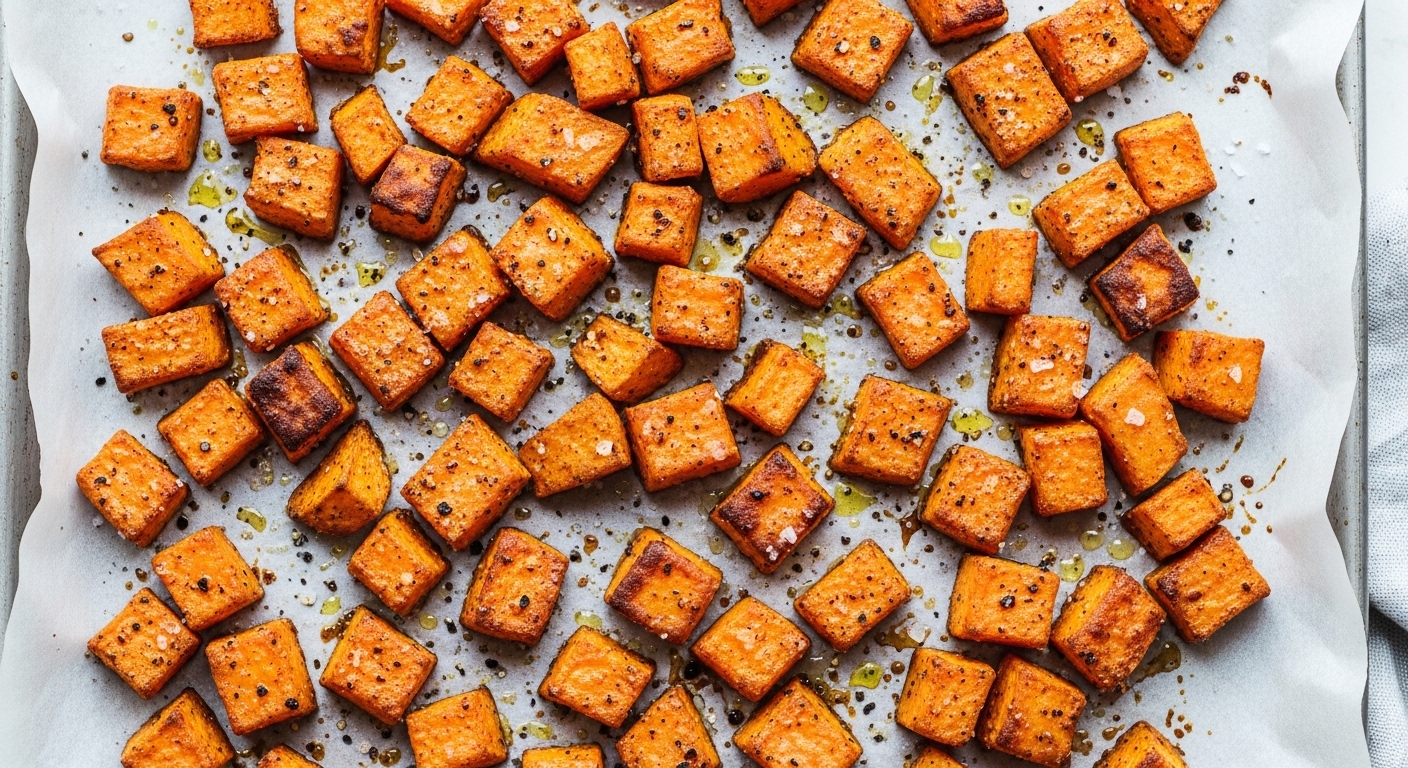
Perfect Roasted Sweet Potatoes with Crispy Edges
Let me guess you came here because you’ve had okay roasted sweet potatoes, but you know deep down they can taste way better. I’ve been there, staring at a tray of limp, pale cubes and thinking, “Wow, I really messed this up.” Roasted sweet potatoes deserve better, and honestly, so do you. This guide fixes that, one crispy edge at a time.
I roast sweet potatoes all year, not just when fall shows up with pumpkin-spice energy. They work as a side, a snack, or even a main if you pile on toppings. Once you crack the method, you’ll stop treating them like an afterthought. Ready to turn a humble root veggie into a star? Let’s do this.
Why Roasted Sweet Potatoes Never Get Old
Sweet potatoes bring natural sweetness, creamy centers, and crispy edges when you roast them right. They play nice with savory spices, spicy heat, and even sweet glazes. Few vegetables work this hard without complaining.
I also love how forgiving they feel. You can roast them for weeknight dinners or fancy them up for guests. Ever notice how everyone grabs seconds when sweet potatoes hit the table? Yeah, that’s not an accident.
Key reasons I keep coming back to roasted sweet potatoes:
- They taste amazing with minimal effort
- They fit almost any diet
- They reheat like champs
- They pair with basically everything
IMO, that’s a solid résumé for one vegetable.
Picking the Right Sweet Potatoes (Yes, It Matters)
I used to grab any sweet potato and hope for the best. That strategy works… sometimes. If you want consistently great roasted sweet potatoes, you need to choose wisely.
What I Look For at the Store
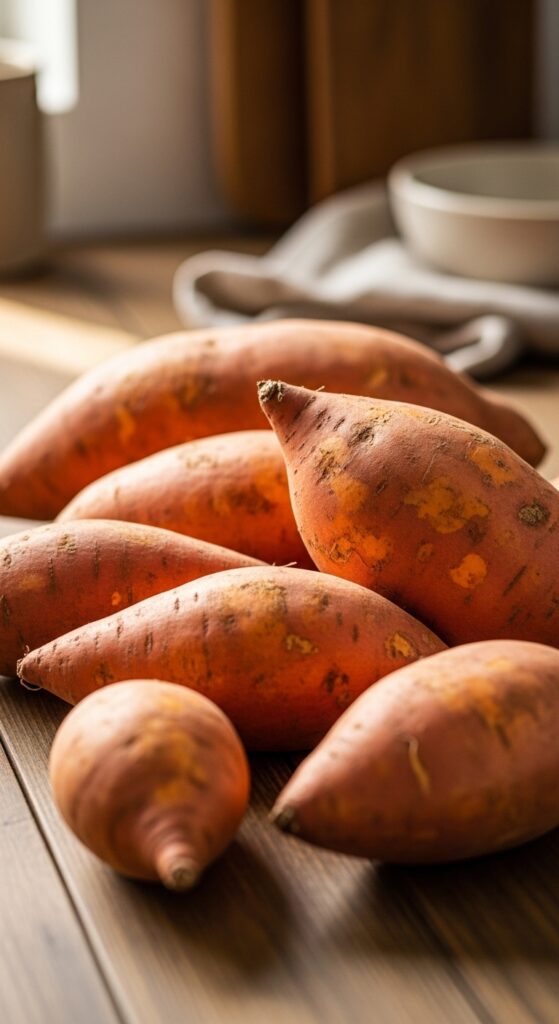
I always pick sweet potatoes that feel firm and heavy. I skip anything with soft spots or deep wrinkles. Those signs scream “I’ve seen better days.”
Quick shopping checklist:
- Firm texture with smooth skin
- Medium size for even cooking
- No sprouts or bruises
Orange-fleshed sweet potatoes roast beautifully and caramelize like a dream. White or purple varieties work too, but they behave differently. Orange stays my go-to for classic roasted sweet potatoes.
To Peel or Not to Peel? Let’s Settle This
People argue about this like it’s a personality trait. I’ll keep it simple: I usually don’t peel them. The skin crisps up nicely and adds texture. Plus, I save time, and I love that.
If the skins look rough or thick, I peel them without guilt. Do what feels right for your dish. Ever tried both ways back-to-back? You’ll notice the difference fast.
My honest take:
- Skin on = rustic, crispy, earthy
- Skin off = softer, smoother, more uniform
No wrong answers here, just preferences.
Cutting Sweet Potatoes for Maximum Crisp
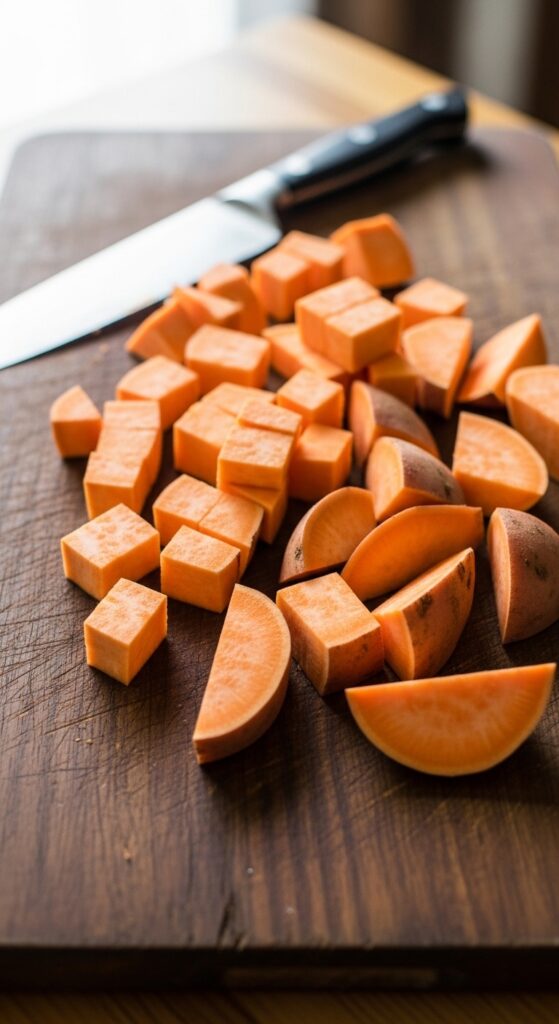
Cutting shapes matter more than people admit. Uneven pieces cook unevenly, and that ruins the vibe. I aim for consistency every single time.
Best Shapes for Roasted Sweet Potatoes
I love cubes or thick wedges. They give me crisp edges and fluffy centers. Thin slices cook fast but risk burning before they crisp.
Cutting tips I swear by:
- Keep pieces roughly the same size
- Avoid tiny chunks unless you like charcoal
- Aim for ¾-inch thickness
Ever wondered why restaurant sweet potatoes taste better? Uniform cuts do a lot of that heavy lifting.
The Oil Question: How Much Is Enough?
Oil helps sweet potatoes brown and crisp. Too little oil dries them out. Too much oil turns them greasy. Balance matters here.
I toss my sweet potatoes until they shine, not swim. Olive oil works great, but avocado oil handles high heat like a champ. I switch depending on mood and pantry.
Oil rules I follow:
- 1–2 tablespoons per pound
- Toss until evenly coated
- Add oil before seasoning
FYI, oil after roasting feels pointless and sad.
Seasoning Roasted Sweet Potatoes Like You Mean It
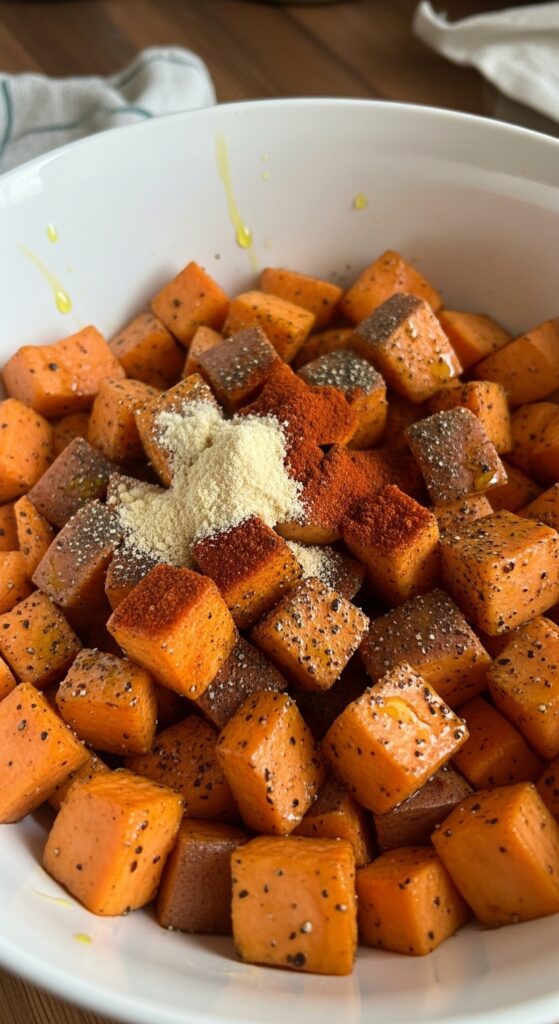
Salt alone works, but you can do better. Sweet potatoes love bold flavors, and they don’t scare easily.
My Go-To Savory Seasoning Combos
I rotate seasonings based on mood and meal. I rarely measure because I trust my instincts (and taste buds).
Savory favorites:
- Salt + black pepper + garlic powder
- Smoked paprika + cumin
- Chili powder + oregano
I always season generously before roasting. Ever tried under-seasoned sweet potatoes? Yeah… let’s not repeat that mistake.
Sweet and Spicy Options
Sweet potatoes already bring sugar, so a little heat balances things nicely.
Sweet-leaning combos I love:
- Cinnamon + salt
- Cinnamon + chili flakes
- Maple syrup drizzle after roasting
Yes, I said after roasting. Sugar burns easily, and burnt maple syrup smells tragic.
Oven Temperature: The Make-or-Break Factor
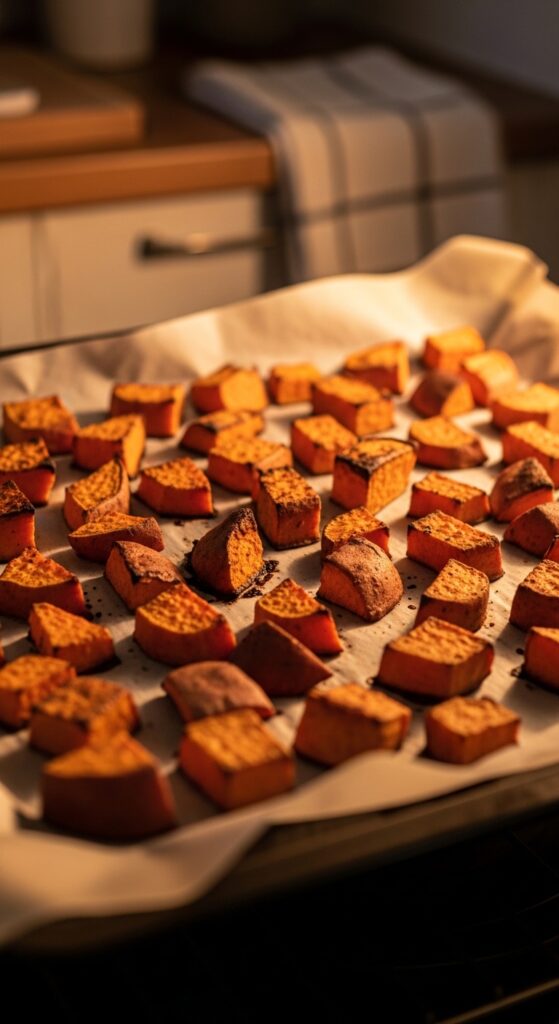
Low heat equals soggy sadness. High heat equals caramelized magic. I roast sweet potatoes at 425°F (220°C) every time.
This temperature gives me crispy edges without drying the inside. I’ve tested lower temps, and they never impress me. Ever pulled out pale sweet potatoes and pretended they looked “healthy”? Same.
Why 425°F works:
- Encourages browning
- Prevents steaming
- Keeps centers tender
Trust the heat. Your oven knows what to do.
Spacing on the Pan: Don’t Crowd Them
Crowding kills crispiness. When sweet potatoes pile up, they steam instead of roast. I learned this the hard way more than once.
I always spread them in a single layer with space between pieces. If I need two pans, I use two pans. No shortcuts here.
Pan spacing rules:
- Single layer only
- Use a large sheet pan
- Rotate pans halfway through
Crisp edges reward patience.
How Long to Roast Sweet Potatoes
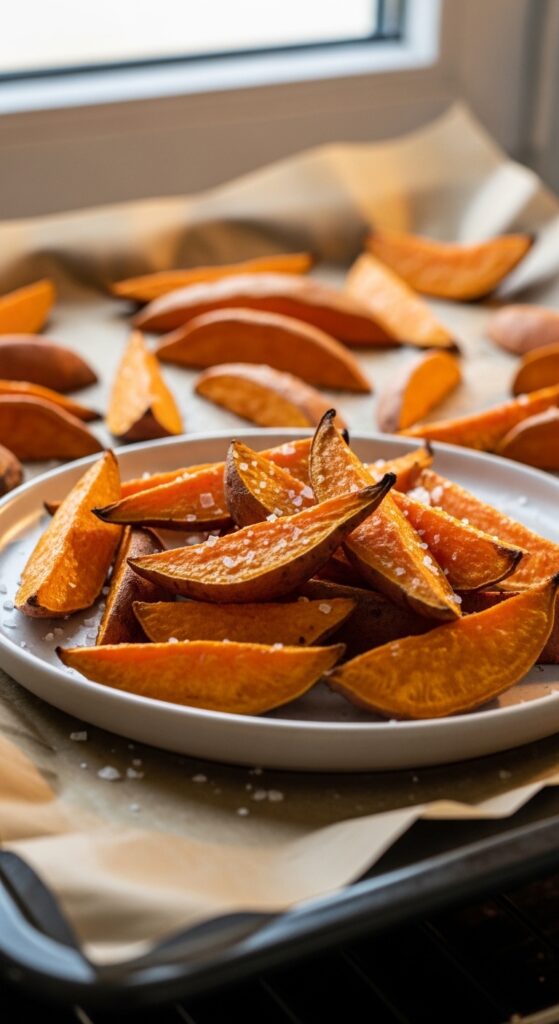
Timing depends on size, but I aim for 25–35 minutes. I flip halfway to expose fresh surfaces to heat. That step matters more than people think.
I check for fork-tender centers and deep golden edges. If they look pale, I give them more time. Ever rush roasted sweet potatoes? They remember.
Timing breakdown:
- Small cubes: 25 minutes
- Medium cubes: 30 minutes
- Wedges: 30–35 minutes
Let color guide you, not just the clock.
Common Roasted Sweet Potato Mistakes (I’ve Made Them All)
I mess up sometimes, and that’s okay. Learning what not to do helps just as much as learning what works.
Mistakes to avoid:
- Using too little oil
- Skipping preheat
- Crowding the pan
- Under-seasoning
If your sweet potatoes turn out soft and bland, one of these probably caused it. Fix one thing next time and watch the upgrade happen.
Roasted Sweet Potatoes for Meal Prep
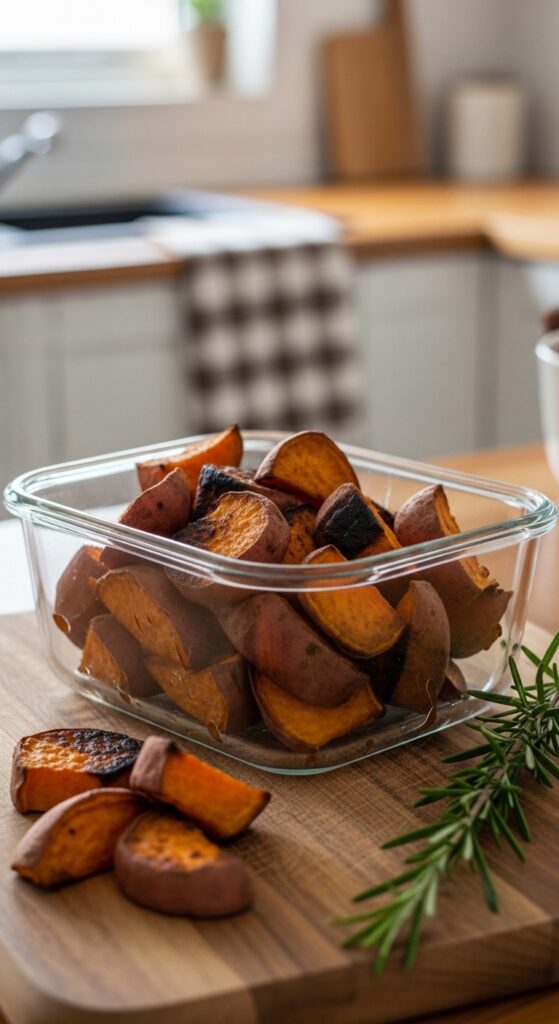
Roasted sweet potatoes save my week more times than I admit. I roast a big batch and use them everywhere.
They store well and reheat without drama. I keep them in the fridge for up to 4–5 days.
Meal prep ideas:
- Add to grain bowls
- Toss into salads
- Stuff into wraps
- Top with eggs for breakfast
They play nice with leftovers, which feels like a small miracle.
Making Them Crispy Again When Reheating
Microwaves ruin texture. I avoid them unless I feel desperate. I reheat roasted sweet potatoes in the oven or air fryer.
Best reheating methods:
- Oven at 400°F for 8–10 minutes
- Air fryer at 375°F for 5–7 minutes
They won’t taste exactly fresh, but they come close. That’s a win in my book 🙂
Flavor Variations That Never Get Boring
Roasted sweet potatoes feel endlessly customizable. I switch flavors based on season, mood, or whatever I find in my spice drawer.
Mediterranean Style
I toss sweet potatoes with olive oil, garlic, and oregano. After roasting, I add feta and olives. That combo hits every time.
Spicy Southwest
I use chili powder, cumin, and smoked paprika. After roasting, I squeeze lime and sprinkle cilantro. Bold and addictive.
Sweet Comfort Version
I roast with cinnamon and salt. After roasting, I drizzle honey or maple syrup. Cozy vibes, no regrets.
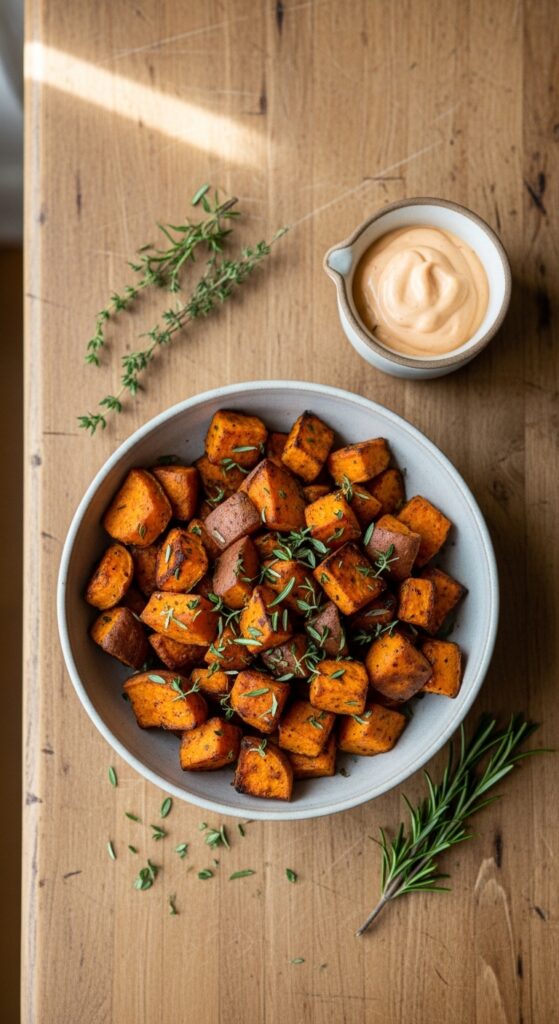
Pairing Roasted Sweet Potatoes with Main Dishes
Sweet potatoes fit into almost any meal. I serve them with chicken, fish, tofu, or just a big salad.
My favorite pairings:
- Grilled chicken or turkey
- Roasted salmon
- Black bean burgers
- Fried eggs and avocado
Ever notice how sweet potatoes make a meal feel complete? They quietly carry the plate.
Nutritional Benefits (Without Getting Preachy)
Sweet potatoes bring fiber, vitamin A, and complex carbs. They fuel you without spiking energy and crashing it later.
I like how they feel satisfying without feeling heavy. That balance matters when you eat them often.
Nutritional highlights:
- High in beta-carotene
- Good source of fiber
- Naturally gluten-free
Food should taste good and make you feel good. Sweet potatoes check both boxes.
Roasted Sweet Potatoes for Special Diets
These work for vegan, vegetarian, dairy-free, and gluten-free eating styles. You don’t need substitutions or weird swaps.
I appreciate foods that don’t demand gymnastics to fit diets. Roasted sweet potatoes just show up and do the job.
When Things Go Wrong (Quick Fixes)
Even solid cooks hit bumps. I troubleshoot fast instead of panicking.
Too soft?
Crank the heat and roast longer.
Too bland?
Finish with salt, acid, or sauce.
Burnt edges?
Lower heat next time and cut larger pieces.
Cooking always offers second chances.
Sauces That Love Roasted Sweet Potatoes
I don’t always need sauce, but when I add it, magic happens.
Sauce ideas I swear by:
- Garlic yogurt sauce
- Tahini + lemon
- Chipotle mayo
- Honey mustard
A drizzle goes a long way. Don’t drown them.
Making Roasted Sweet Potatoes Feel Fancy
You don’t need culinary school tricks. Small upgrades change everything.
Easy upgrades:
- Finish with flaky salt
- Add fresh herbs
- Sprinkle toasted nuts
- Grate a little cheese
Presentation matters, even on a Tuesday night.
Why I Keep Coming Back to Roasted Sweet Potatoes
I trust roasted sweet potatoes. They never let me down, and they never demand much effort. That reliability matters when life feels busy.
I love foods that meet me where I am. Sweet potatoes always do.
Conclusion
Roasted sweet potatoes don’t need mystery or perfection. They need heat, space, seasoning, and a little confidence. Once you nail those basics, you’ll riff and adjust without stress.
Next time you roast a batch, trust the process and taste as you go. Have fun with it, mess up once or twice, and laugh when you do. Cooking should feel good and honestly, roasted sweet potatoes make that pretty easy :/