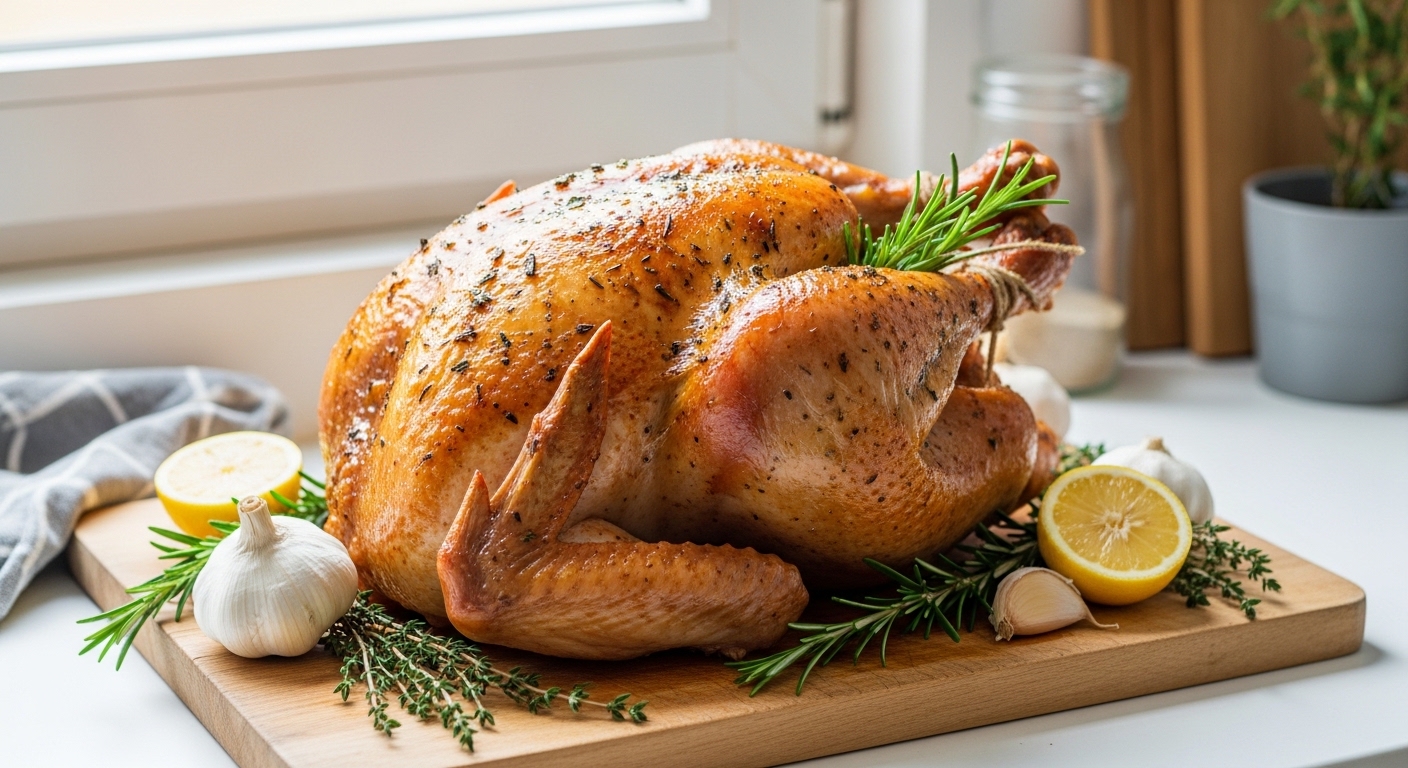
The Best Roasted Turkey Recipe for Juicy, Crispy Results
Let’s be real for a second roasted turkey has a reputation problem. People think it’s dry, fussy, and only worth making once a year when family pressure hits peak levels. I used to think that too. Then I cracked the code, burned a few birds along the way (RIP, Turkey #3), and finally landed on a roasted turkey recipe that’s juicy, flavorful, and honestly kind of foolproof.
If you’ve ever stared at a raw turkey wondering who gave you this responsibility, you’re in the right place. I’ll walk you through everything like a friend hovering in your kitchen, coffee in hand, saying, “Relax, you’ve got this.” And yes you actually do.
Why This Roasted Turkey Recipe Actually Works
Before we get into the how, let’s talk about the why. Ever notice how some turkey recipes feel like a chemistry exam? Twelve steps, three thermometers, and a prayer? Hard pass.
This roasted turkey recipe works because it focuses on a few key principles instead of unnecessary complexity. I learned this the hard way, IMO, after overthinking it for years.
Here’s what makes the difference:
- Moisture beats fancy techniques every time
- Seasoning under the skin matters more than on top
- Temperature control saves turkeys and sanity
- Resting time isn’t optional, FYI
Simple ideas. Big payoff. Who doesn’t love that?
Choosing the Right Turkey (Yes, It Matters)
Let’s start at the store, because the bird you choose sets the tone for everything else. Ever grabbed the biggest turkey thinking bigger equals better? Yeah… I’ve done that too. Not my finest moment.
Fresh vs Frozen Turkey
Both work, but they behave differently.
- Fresh turkey
- Easier prep
- No thawing drama
- Usually more expensive
- Frozen turkey
- Budget-friendly
- Requires planning
- Just as tasty when handled right
I usually go frozen because I like saving money for dessert. Just remember: thawing takes time. A 15-pound turkey needs about 3–4 days in the fridge. No shortcuts unless you enjoy panic.
Size Guidelines That Won’t Fail You
Here’s a rule I swear by:
- 1–1.25 pounds per person
That gives you enough for dinner plus leftovers. And let’s be honest leftover turkey sandwiches deserve respect.
Prepping the Turkey Without Losing Your Mind
This part scares people, but it’s mostly mental. The turkey doesn’t bite. I promise.
Thawing the Right Way
If your turkey arrives frozen solid, do this:
- Keep it wrapped
- Place it on a tray (trust me on this)
- Refrigerate for 24 hours per 4–5 pounds
Avoid countertop thawing unless you enjoy food safety lectures.
Cleaning: What Actually Matters
Quick truth bomb: You don’t need to wash your turkey. Washing spreads bacteria everywhere like an uninvited guest.
Do this instead:
- Remove packaging and giblets
- Pat the turkey completely dry
- Wash your hands like you mean it
Dry skin equals crispy skin. That’s not negotiable.
The Secret to Juicy Turkey: Seasoning Under the Skin
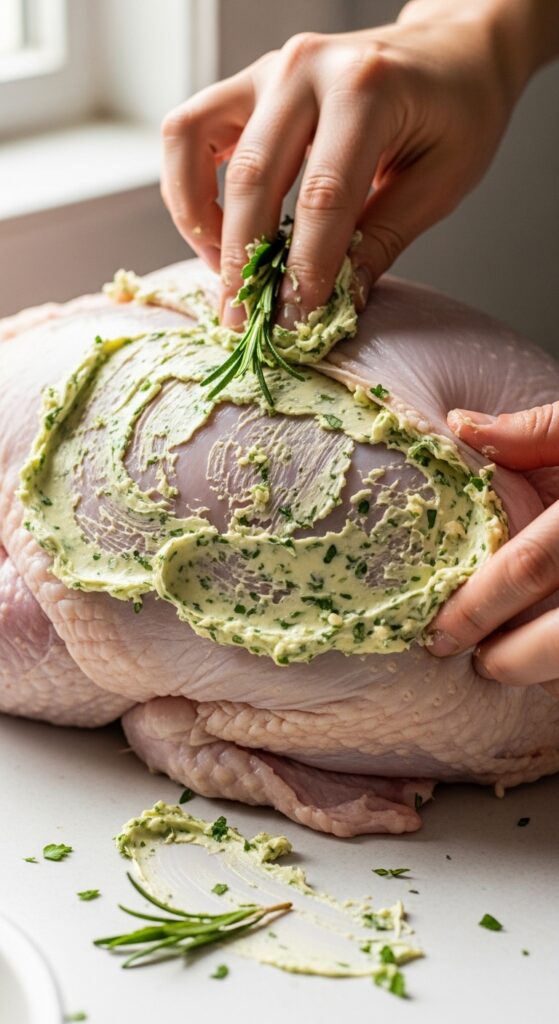
If you remember one thing from this article, remember this: season under the skin. Ever wondered why restaurant turkey tastes better? This is why.
What You’ll Need
For my go-to seasoning mix:
- Softened butter or olive oil
- Salt (don’t be shy)
- Black pepper
- Garlic powder
- Fresh or dried herbs (thyme, rosemary, sage)
How to Do It Without Tearing the Skin
Gently slide your fingers between the skin and meat. Go slow. Think spa day, not wrestling match.
Then:
- Spread seasoning directly on the meat
- Massage it in a little
- Let the skin fall back into place
This step alone upgrades your roasted turkey recipe by about 300%.
To Brine or Not to Brine?
Ah yes, the great turkey debate. People get passionate about this. I’ll keep it simple.
Wet Brine: Pros and Cons
Pros:
- Extra juicy meat
- Forgiving if you overcook slightly
Cons:
- Takes fridge space
- Adds prep time
Dry Brine: My Personal Favorite
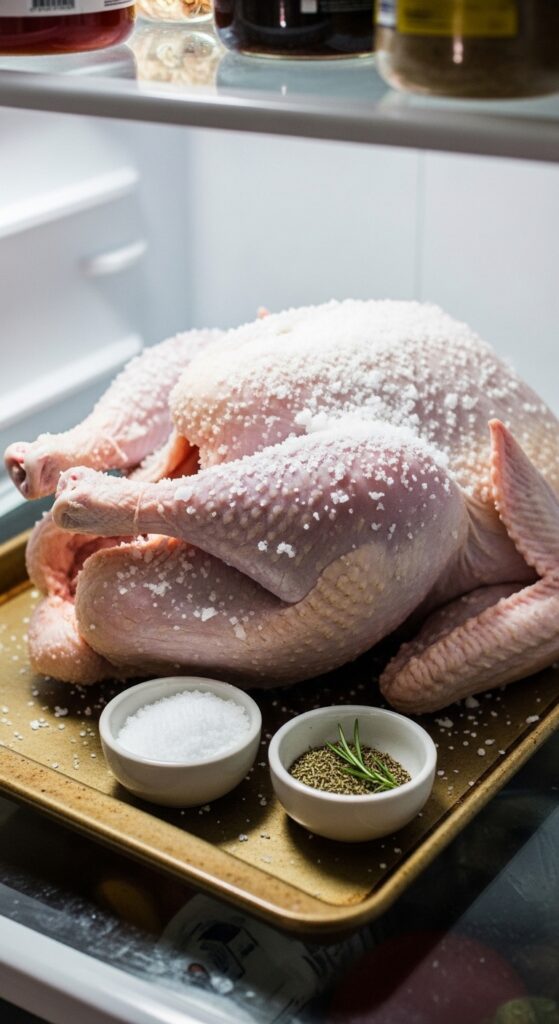
I dry brine almost every time. It’s low effort and high reward.
Here’s how:
- Salt the turkey generously
- Leave it uncovered in the fridge 24–48 hours
- Let the skin dry out naturally
This gives you crispy skin and seasoned meat. Win-win.
Setting Up Your Oven for Success
Your oven plays a bigger role than you think. Ever blamed the recipe when the real villain was uneven heat? Same.
Rack Position Matters
Always place your turkey:
- On the lower-middle rack
- With space for air circulation
This helps the bird cook evenly without burning the top.
Roasting Pan Basics
You don’t need fancy equipment.
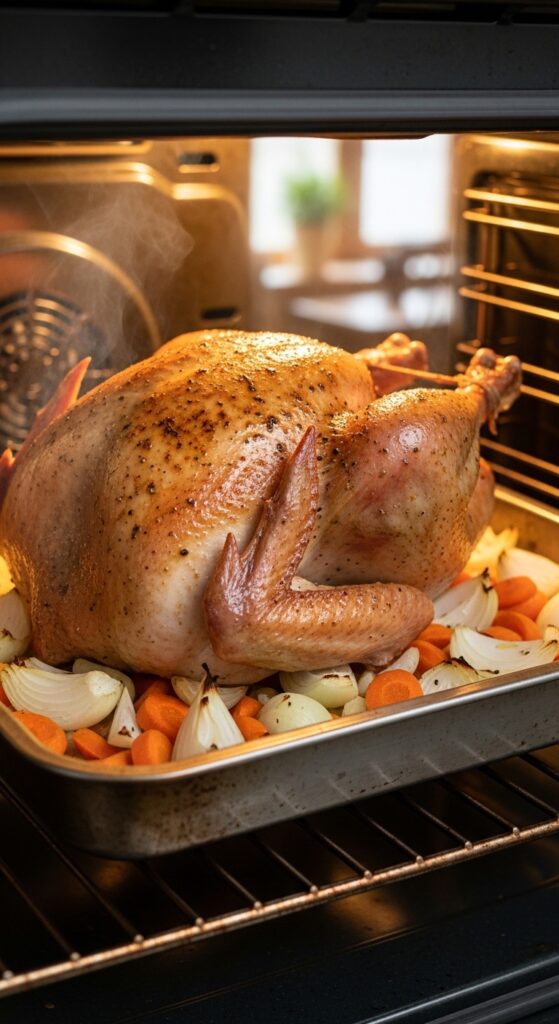
Use:
- A sturdy roasting pan
- A rack (or veggies as a natural rack)
Carrots, onions, and celery work great and double as flavor boosters.
The Best Roasting Temperature (No Guesswork)
Let’s settle this once and for all.
Start Hot, Then Slow Down
This is my tried-and-true method:
- 425°F for 30 minutes
- Reduce to 350°F for the rest of the cook
That initial blast helps crisp the skin. The lower temp finishes the job without drying things out.
Ever wondered why some turkeys look pale and sad? They skipped the heat boost.
How Long to Roast a Turkey Without Stress
Timing stresses people out more than anything else. Here’s the calm approach.
General Roasting Time Guide
At 350°F:
- 12–14 lb turkey: 3 to 3.5 hours
- 15–18 lb turkey: 3.5 to 4 hours
- 18–22 lb turkey: 4 to 4.5 hours
But and this matters time is a guideline, not a guarantee.
Use a Thermometer Like a Pro
Insert it into the thickest part of the thigh.
You want:
- 165°F in the thigh
- 160°F in the breast (it rises while resting)
No thermometer? Fix that before turkey day. Seriously.
Basting: Helpful or Hype?
Let’s talk basting. People love it. I tolerate it.
The Truth About Basting
Basting adds flavor, but:
- It lowers oven temperature
- It doesn’t magically save dry meat
If you baste, do it once or twice max.
IMO, better results come from good seasoning and proper temperature. Less drama, better turkey.
Covering the Turkey: When and Why
Foil isn’t the enemy. Misusing it is.
When to Tent with Foil
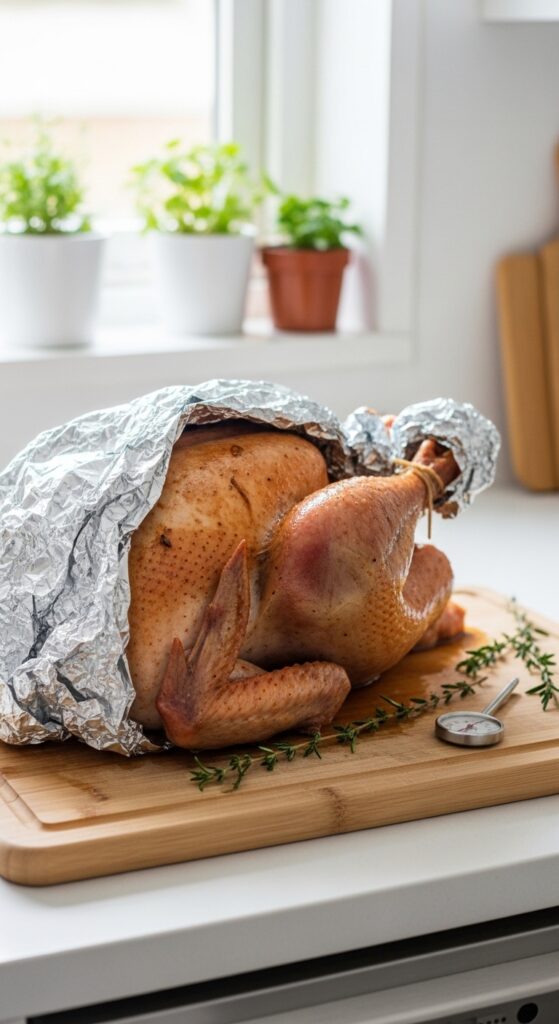
If the skin browns too fast:
- Loosely tent the breast with foil
- Leave the legs exposed
This protects the white meat without sacrificing crispy skin everywhere else.
The Most Ignored Step: Resting the Turkey
I know everyone’s hungry. I know the kitchen smells amazing. Still rest the turkey.
Why Resting Matters
Resting allows juices to redistribute instead of spilling everywhere.
Do this:
- Rest 20–30 minutes
- Tent loosely with foil
- Use the time to make gravy
Skip resting and you’ll lose moisture fast. Nobody wants that :/
Carving the Turkey Without Destroying It
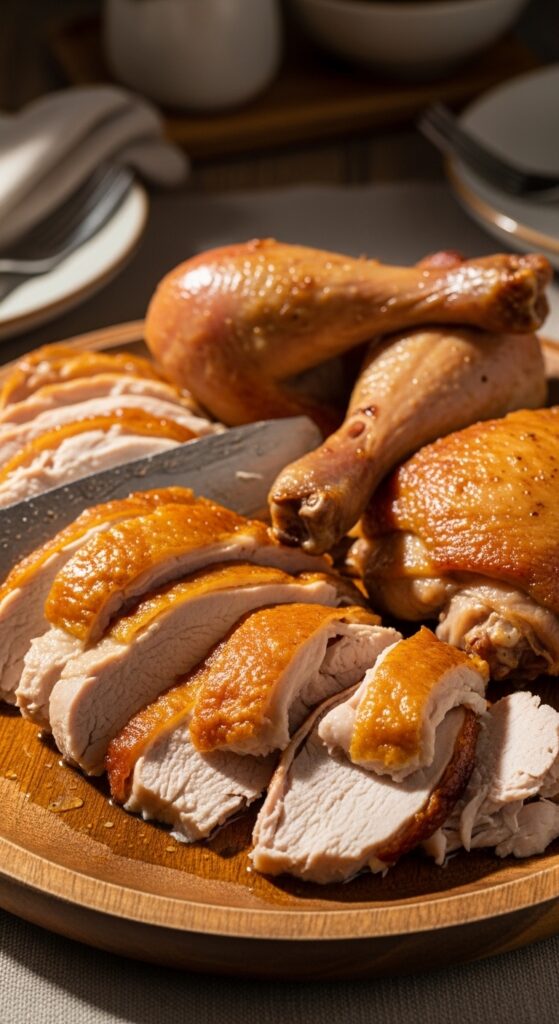
Carving feels intimidating until you realize it’s just controlled slicing.
Simple Carving Order
- Remove legs and thighs
- Separate drumsticks
- Slice breast meat against the grain
- Save wings for snacks (chef’s privilege)
Sharp knife. Calm energy. You’ll look like you know what you’re doing.
Flavor Variations to Keep Things Interesting
Once you master the base roasted turkey recipe, you can play.
Classic Herb Butter
- Butter
- Rosemary
- Thyme
- Garlic
You can’t go wrong here. Ever.
Citrus and Garlic
- Lemon or orange zest
- Garlic cloves
- Olive oil
Bright, fresh, and great if you want something lighter.
Smoky Paprika Twist
- Smoked paprika
- Black pepper
- Butter
This adds depth without overpowering the turkey.
Common Turkey Mistakes (I’ve Made Them All)
Let’s save you some heartbreak.
- Skipping the thermometer
- Overcooking “just to be safe”
- Under-seasoning the meat
- Carving too early
Sound familiar? Yeah. Learn from my mistakes so you don’t repeat them.
Leftover Turkey Ideas That Don’t Feel Sad
Leftovers deserve love too.
Try these:
- Turkey sandwiches with cranberry sauce
- Turkey soup with veggies
- Turkey fried rice
- Turkey pot pie
Honestly, sometimes I enjoy leftovers more than the main event.
Make-Ahead Tips to Stay Sane
Hosting? Prep ahead.
You can:
- Dry brine 2 days early
- Chop aromatics the night before
- Measure spices in advance
Future-you will feel grateful. Past-you will feel smug.
Is This Roasted Turkey Recipe Worth It?
Short answer: yes. Longer answer: absolutely yes.
This roasted turkey recipe delivers juicy meat, crispy skin, and zero unnecessary stress. It works for holidays, dinner parties, or anytime you feel brave enough to roast a whole bird.
You don’t need chef skills. You need patience, seasoning, and a thermometer.
Final Thoughts
Roasting a turkey feels intimidating until you actually do it. Then it clicks. You realize it’s just food, not a test of character.
Follow the steps, trust the process, and don’t panic when things look imperfect. They always do. And somehow, the turkey still comes out amazing.
So go preheat that oven, friend. Your perfect roasted turkey is closer than you think.