Turkey Brine Recipes: Juicy, Flavorful, Homemade Ideas
Let’s cut to the chase if you’ve ever roasted a turkey only to have it come out dry, you already know the heartbreak. No one wants a bird that tastes like cardboard, right? That’s where turkey brine recipes come in. Brining isn’t just a foodie trend; it’s a total game-changer that locks in juiciness, infuses flavor, and turns an ordinary turkey into something memorable.
FYI, I’ve tried more brines than I care to admit from classic salt-and-water solutions to wild combinations that include cider, herbs, and spices. Some worked brilliantly, others… well, let’s just say they were edible but not Instagram-worthy. By the end of this guide, you’ll know exactly how to brine like a pro, whether it’s Thanksgiving, a weeknight roast, or just because you deserve it 🙂
Why Brining Works
Ever wondered why some turkeys come out juicy while others are dry as toast? Here’s the science simplified so your brain doesn’t hurt:
- Salt penetrates the meat, breaking down proteins and allowing it to hold more water.
- Flavor infusion: Herbs, spices, and aromatics get absorbed, making the turkey taste amazing all the way through.
- Texture improvement: The turkey meat becomes tender, less stringy, and downright juicy.
So yes, brining is basically a cheat code for perfect turkey.
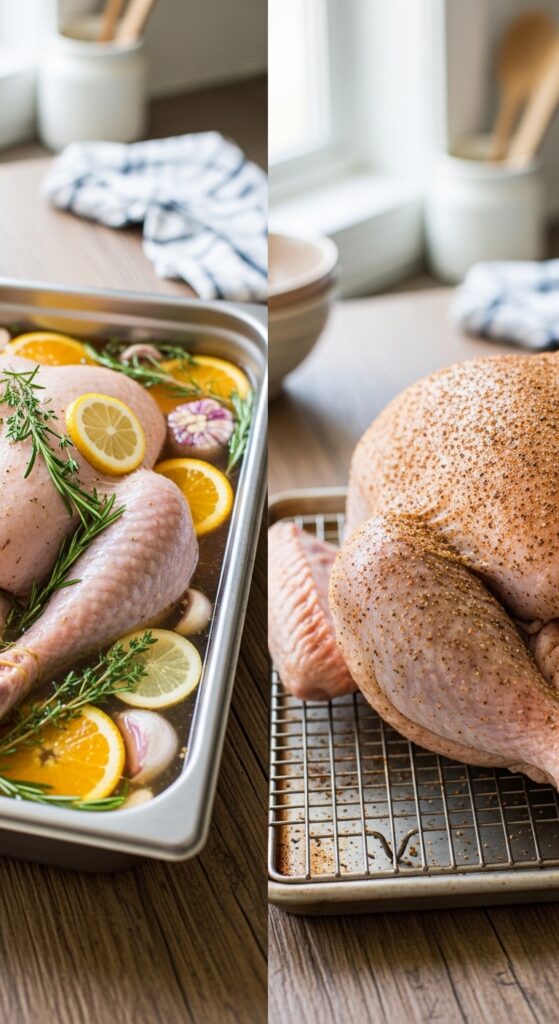
Choosing Your Brine: Wet vs. Dry
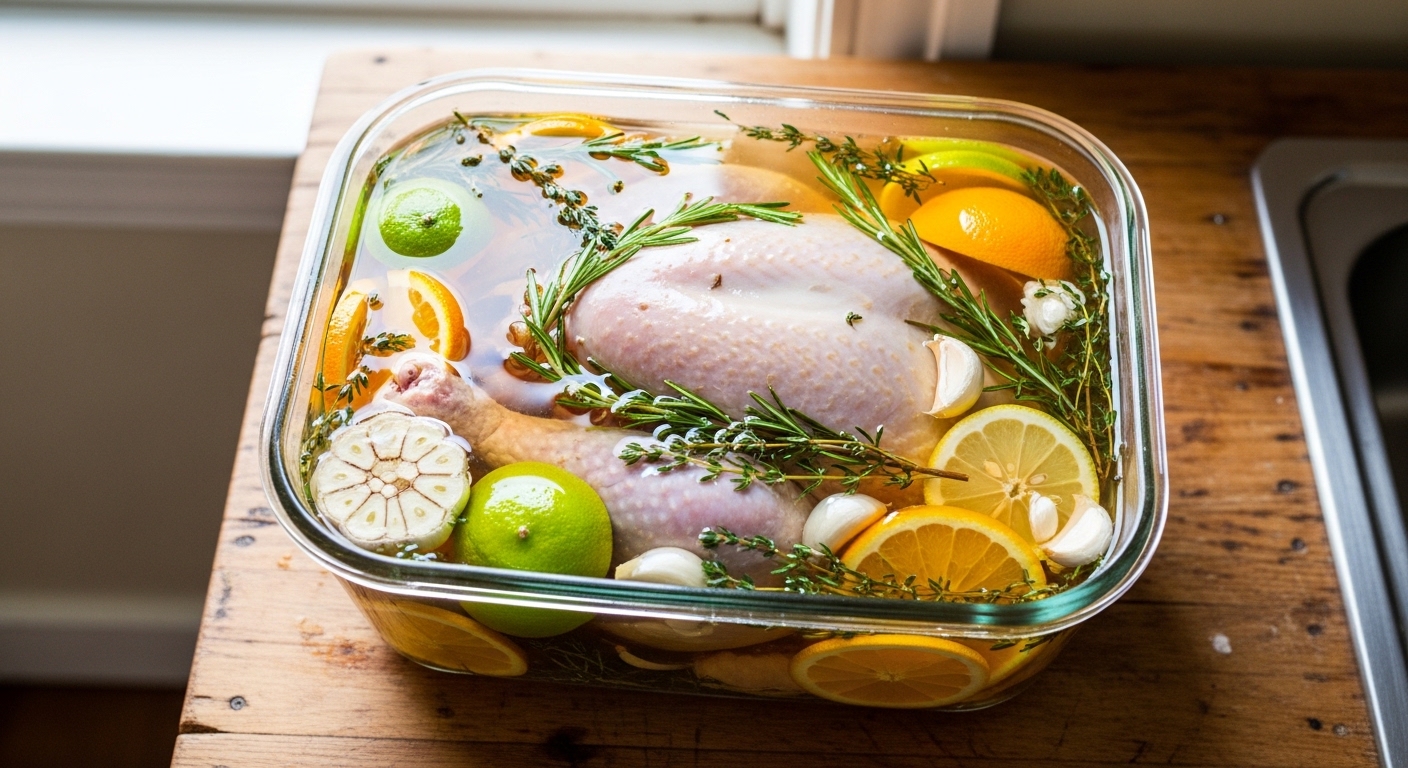
Wet Brine
- Pros: Deep flavor penetration, keeps turkey super juicy, easy to customize with herbs, spices, or citrus.
- Cons: Takes up a lot of fridge space, messy to handle.
Dry Brine
- Pros: Minimal space, simple cleanup, skin comes out crispy.
- Cons: Flavor penetration is slightly less even, but still fantastic.
IMO, dry brines are my go-to for smaller birds, while wet brines shine for larger roasts.
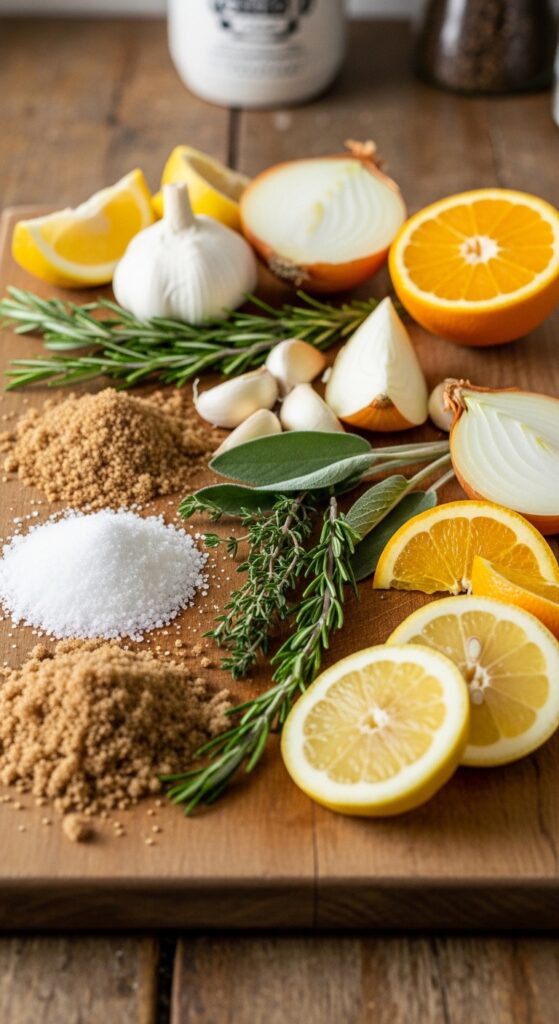
Essential Ingredients for a Turkey Brine
No matter the style, a good brine has a few core components:
- Salt: Kosher salt is king. It penetrates evenly and doesn’t make the meat overly salty.
- Sugar (optional): Brown sugar or maple syrup balances the salt and promotes browning.
- Aromatics: Onion, garlic, citrus, herbs like thyme, rosemary, and sage.
- Liquids (for wet brine): Water, stock, or apple cider.
Pro tip: Don’t overthink it. A simple brine often beats a complicated one. Sometimes less is more.
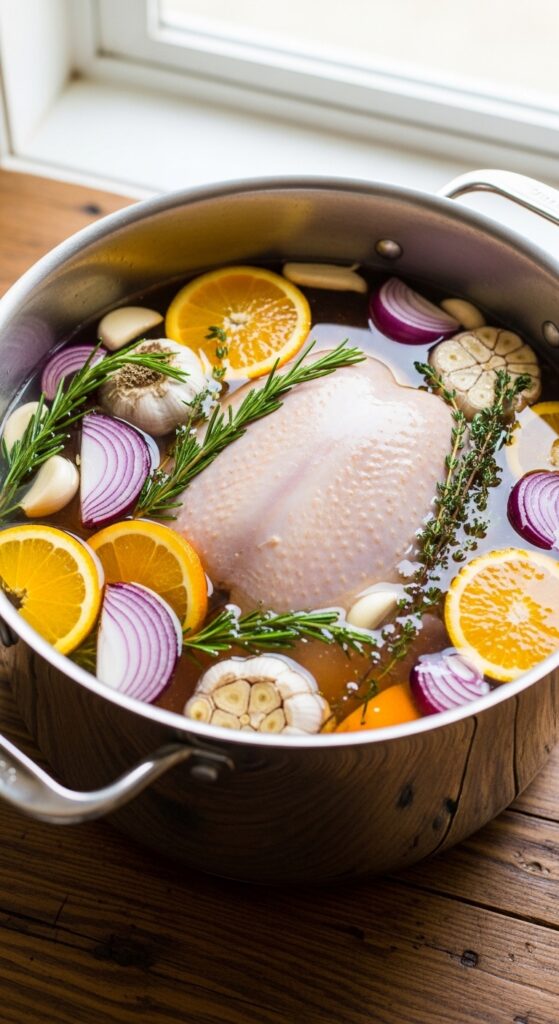
Classic Wet Brine Recipe
This is your fail-proof foundation for any turkey.
Ingredients
- 1 gallon cold water
- 1 cup kosher salt
- 1/2 cup brown sugar
- 2 onions, quartered
- 4 cloves garlic, smashed
- 2 oranges, sliced
- 3–4 sprigs fresh rosemary and thyme
- 1 tbsp black peppercorns
Method
- Dissolve salt and sugar in water over low heat; let cool completely.
- Add aromatics to the cooled brine.
- Submerge the turkey completely in the brine, cover, and refrigerate 12–24 hours.
- Remove turkey, rinse lightly, and pat dry before roasting.
FYI: Don’t skimp on the drying step dry skin = crispy roasted goodness.
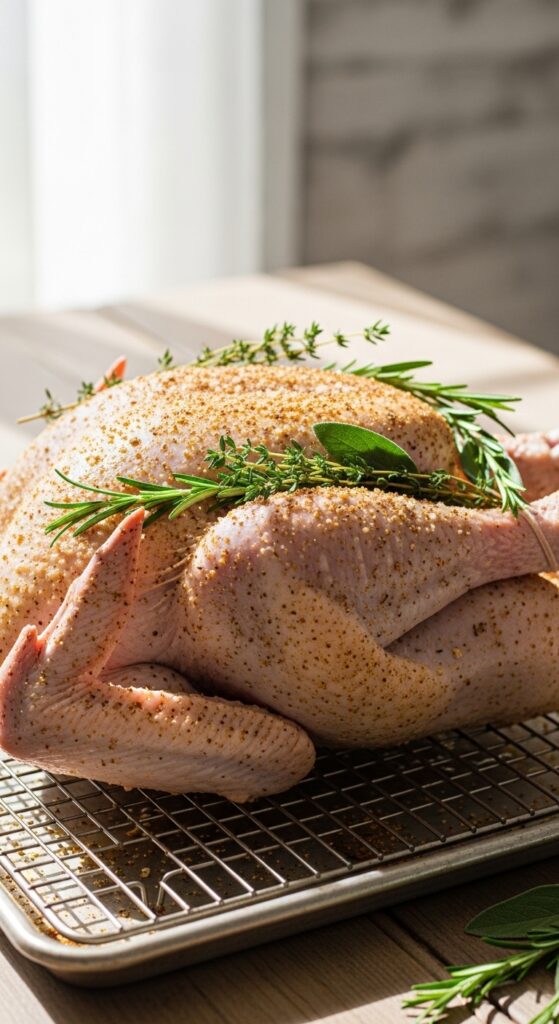
Flavor-Packed Dry Brine
Perfect when fridge space is tight or you want that crispy skin edge.
Ingredients
- 1/4 cup kosher salt per 5 lbs of turkey
- 2 tbsp brown sugar
- 1 tsp black pepper
- 2 tsp chopped fresh herbs (rosemary, thyme, sage)
- Zest of 1 lemon or orange
Method
- Mix salt, sugar, herbs, and zest.
- Rub evenly over the turkey, including under the skin where possible.
- Place turkey on a rack, uncovered, in the fridge 24–48 hours.
- Roast as usual skip rinsing. Just pat dry and enjoy crispy skin.
Dry brine lovers, this one’s for you. Crispy, juicy, and almost no cleanup.
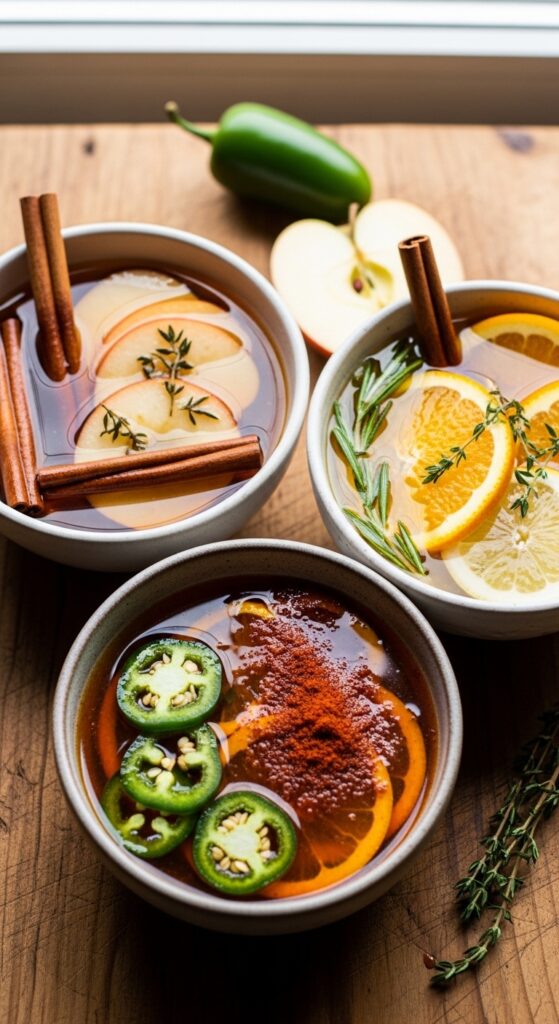
Creative Turkey Brine Recipes
Want to step up your brining game? Here are some fun variations I swear by:
Apple Cider Brine
- Swap water for apple cider.
- Add cinnamon sticks, sliced apples, and cloves.
- Outcome: subtle sweetness with aromatic warmth.
Citrus-Herb Brine
- Add grapefruit, lemon, and orange slices.
- Toss in rosemary, thyme, and sage.
- Outcome: Bright, fresh flavor that screams “summer roast.”
Spicy Kick Brine
- Add jalapeños, smoked paprika, and cayenne.
- Mix with classic wet brine ingredients.
- Outcome: A little heat that complements the turkey without overpowering.
Ever tried brining with whiskey or bourbon? It’s a conversation starter at Thanksgiving, IMO.
How Long Should You Brine Your Turkey?
Time matters. Too short, and the flavor won’t penetrate; too long, and you risk mushy meat.
- Small turkey (10–12 lbs): 12–16 hours wet, 24 hours dry
- Medium turkey (12–16 lbs): 16–24 hours wet, 24–36 hours dry
- Large turkey (16–20 lbs): 24 hours wet, 36–48 hours dry
Pro tip: Never go past 48 hours the texture starts to break down.
Brining Tips for Maximum Juiciness
- Use a food-safe container that’s big enough for the turkey to be fully submerged.
- Keep everything cold safety first! Always refrigerate your wet brine.
- Rinse lightly (for wet brine) before roasting to avoid over-salty meat.
- Pat dry thoroughly for crispy skin.
- Add aromatics strategically: garlic under the skin, herbs in the cavity.
Roasting After Brining
Brined turkey roasts differently than non-brined turkey. Here’s how to get the best results:
- Preheat oven to 325–350°F.
- Roast uncovered for the first 1–2 hours.
- Tent with foil if skin browns too fast.
- Use a meat thermometer 165°F in the thickest part of the thigh.
- Rest turkey 20–30 minutes before carving.
IMO, skipping the resting step is a rookie mistake. Juicy meat comes from patience.
Leftover Brine Uses
Don’t toss that flavorful brine! You can repurpose it:
- Soup base: Add leftover vegetables, turkey meat, and noodles or rice.
- Gravy enhancer: Use a splash of brine to boost flavor.
- Vegetable braising liquid: Cook root vegetables in leftover brine for extra depth.
Common Brining Mistakes
Even seasoned cooks slip up sometimes. Watch out for:
- Too much salt: Stick to kosher salt ratios; don’t eyeball.
- Over-soaking: Leads to mushy texture.
- Skipping aromatics: Flavor comes from herbs, spices, and fruit.
- Roasting too cold: Bring turkey to room temp briefly before roasting.
Avoid these, and you’re on track for a perfect turkey.
Tips for Brining Large Turkeys
- Use a stockpot or brining bag large enough to hold the bird and liquid.
- Keep the turkey fully submerged; weigh it down with a plate if needed.
- Rotate the turkey halfway through the brine period if your container is narrow.
Brining for Small Turkeys or Turkey Breasts
- Reduce salt and sugar proportionally.
- Dry brine is often better for smaller pieces.
- Monitor timing closely small birds soak up salt faster.
My Personal Brining Secrets
- I like to mix wet and dry brines: wet brine for flavor, dry brine on skin for crispiness.
- Citrus zest under the skin adds a subtle pop of brightness.
- A splash of apple cider or wine in wet brine creates a deeper flavor.
Honestly, these tweaks make a huge difference.
Final Thoughts
Brining isn’t just a step in turkey prep it’s a game-changer for flavor, juiciness, and texture. With a few simple ingredients, some aromatics, and careful timing, you can transform any turkey into the star of the table.
Next time you plan a roast, skip the boring salt rub and give a brine a try. Whether you go classic, citrusy, or spicy, your turkey will thank you. And trust me your guests will too. 🙂