Easy Homemade Roasted Tomato Soup Recipe to Try Today
Craving something warm, rich, and ridiculously satisfying? Perfect, because roasted tomato soup never disappoints. I make this soup whenever I want comfort food without spending my entire evening chained to the stove. The smell alone makes my kitchen feel like a cozy café, and honestly, who doesn’t want that? If you think tomato soup sounds boring, stick with me roasting changes everything.
Why Roasted Tomato Soup Tastes So Much Better
Regular tomato soup works fine, but roasted tomato soup plays in a completely different league. Roasting intensifies sweetness, adds depth, and creates that slightly caramelized magic you just can’t fake. Ever wondered why restaurant soups taste so rich? Chefs roast things. It’s their not-so-secret trick.
When I first tried roasting tomatoes for soup, I expected a subtle difference. I got a flavor explosion instead. The soup suddenly tasted fuller, slightly smoky, and oddly luxurious. Funny how a baking tray can outperform fancy ingredients, right?
The Real Secret: Roasting Transforms Everything
Raw tomatoes bring acidity and freshness. Roasted tomatoes bring complexity and boldness. Heat pulls out natural sugars and softens sharpness. That transformation turns basic soup into something memorable.
Think about it like this:
- Raw tomatoes = bright, acidic, sometimes thin
- Roasted tomatoes = sweet, rich, deeply savory
- Resulting soup = comforting, layered, addictive
Simple change, massive payoff. Hard to argue with that logic.
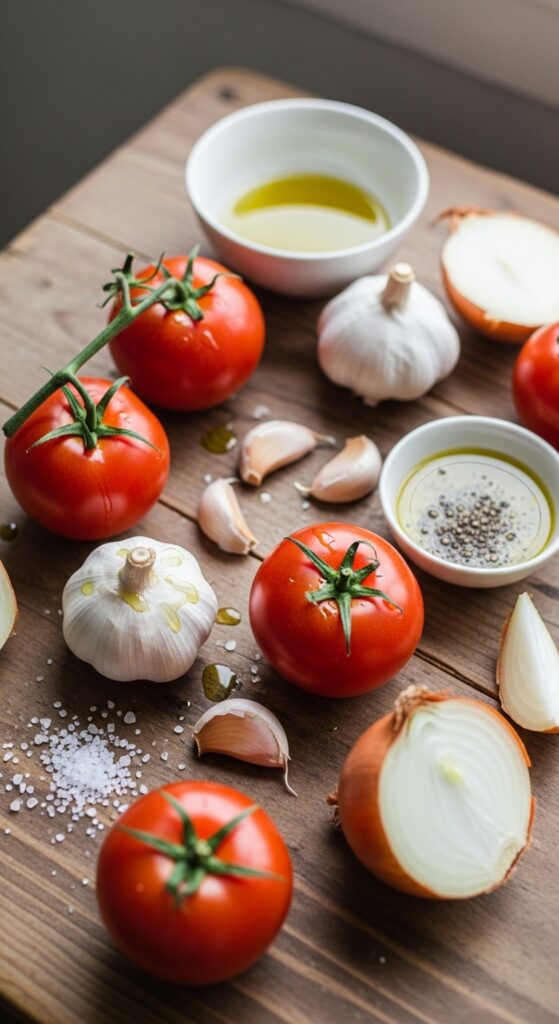
Ingredients That Actually Matter
Let’s keep things practical. You don’t need exotic grocery store treasures or mystery spices. Great roasted tomato soup relies on simple, fresh components that work beautifully together.
Core Ingredients:
- Fresh ripe tomatoes – Roma, vine, cherry, whatever looks good
- Garlic cloves – whole, not minced yet
- Onion – yellow or white works best
- Olive oil – don’t cheap out here
- Salt & pepper – essential, not optional
- Vegetable or chicken broth – quality matters
- Optional cream – for silky richness
That’s it. No drama, no nonsense.
Choosing the Right Tomatoes (Yes, It Matters)
Tomatoes drive the entire flavor profile. Bland tomatoes produce bland soup. Amazing tomatoes produce magic. Sounds obvious, yet people ignore this constantly.
Look for:
- Deep color – pale tomatoes rarely taste great
- Firm but ripe texture – avoid rock-hard or mushy
- Natural sweetness – trust your instincts
I personally love Roma tomatoes for consistency. Cherry tomatoes add incredible sweetness. Mixing varieties creates beautiful complexity. Why settle for one-note flavor?
Prepping Your Vegetables Like a Pro
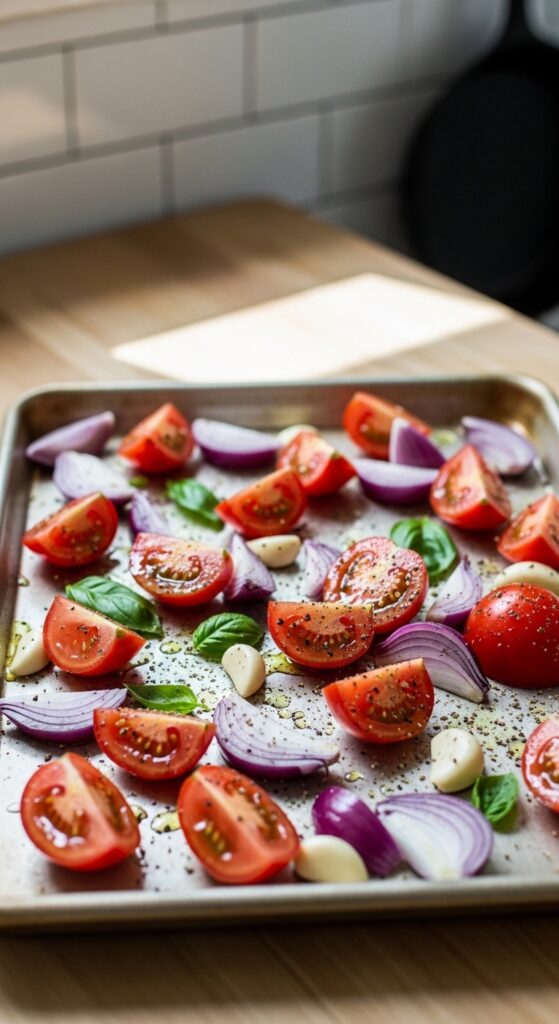
Relax “like a pro” just means “don’t overthink it.” Rough cuts work perfectly because blending fixes everything later. Precision slicing adds stress without benefits.
Here’s my approach:
- Halve large tomatoes
- Peel and quarter the onion
- Leave garlic cloves whole
- Toss everything with olive oil, salt, pepper
That’s it. No fancy knife skills required. Your blender handles the heavy lifting.
Roasting: Where the Magic Begins
Spread your vegetables on a baking tray. Give them space. Crowding leads to steaming, and steaming kills caramelization. Nobody wants sad, soggy vegetables.
Roast at 200°C (400°F) for about 30–40 minutes. Watch for soft texture and slightly charred edges. That color equals flavor. Those golden, roasted bits create the soup’s personality.
And the smell? Absolutely ridiculous. Your kitchen suddenly feels five-star.
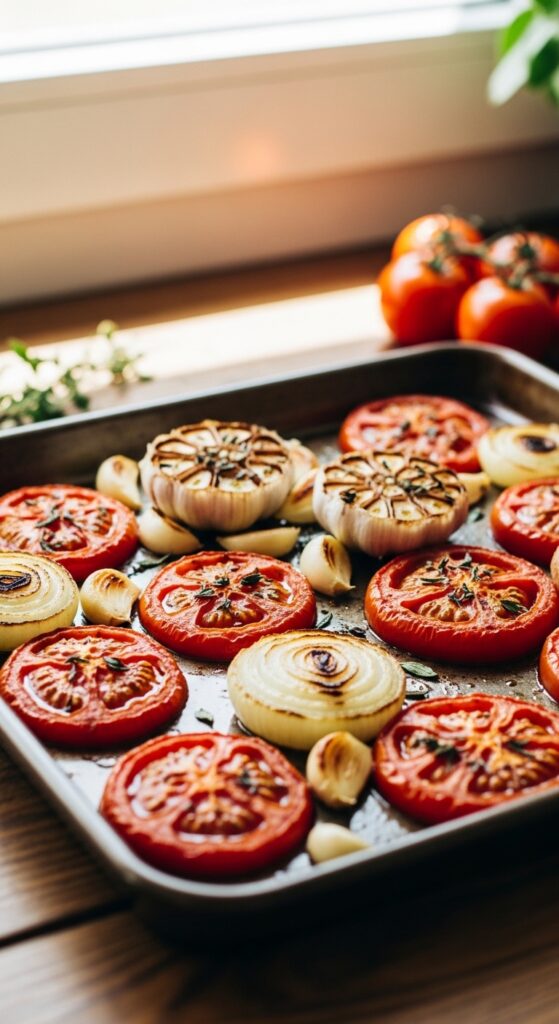
Why Color Equals Flavor
Golden brown edges signal caramelization. Caramelization equals sweetness and depth. Pale vegetables indicate underdeveloped flavor. Ever tasted soup that felt “meh”? Lack of roasting often explains it.
Aim for:
- Light charring
- Softened garlic
- Collapsed tomatoes
- Sweet onion aroma
Those visual cues tell you everything. Cooking becomes intuitive when you learn what to look for.
Building the Soup Base
Once roasting finishes, transfer everything into a pot. Add broth immediately. Watch the flavors merge as heat loosens roasted bits. That moment always feels oddly satisfying.
Simmer gently for 10–15 minutes. Keep heat moderate. Aggressive boiling ruins delicate sweetness. Balance matters more than speed.
At this stage, your soup already smells incredible. Patience pays off.
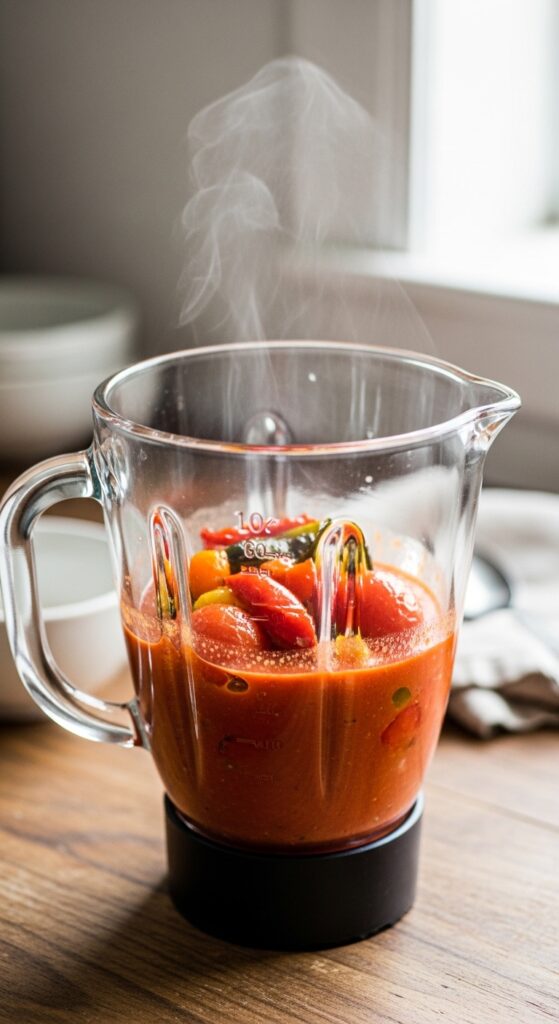
Blending for Perfect Texture
Grab an immersion blender or standard blender. Blend until silky smooth. Chunky tomato soup rarely impresses anyone. Smooth texture enhances that rich, comforting experience.
Safety tip hot liquids demand caution. Blend in batches if necessary. Nobody needs boiling soup explosions. Trust me, cleaning ceilings loses its charm quickly.
Blend thoroughly. Smoothness defines quality.
Adjusting Flavor Like You Mean It
Taste your soup. Always taste your soup. Guesswork never produces greatness. Minor adjustments often create dramatic improvements.
Common tweaks include:
- More salt – enhances sweetness
- Pepper kick – adds warmth
- Splash of cream – softens acidity
- Extra broth – lightens thickness
Tiny changes, huge difference. Cooking rewards curiosity.
Cream or No Cream: The Great Debate
Some people insist on pure tomato soup. Others crave creamy richness. Both approaches work beautifully. Preference drives the decision.
I enjoy both versions depending on mood. Cream adds indulgence. No cream highlights roasted intensity. Why choose permanently when flexibility exists?
IMO, experimentation always wins. 🙂
Flavor Boosters Worth Trying
Roasted tomato soup welcomes creative upgrades. Simple additions create exciting variations without complicating the recipe.
Consider:
- Fresh basil – classic and aromatic
- Chili flakes – subtle heat
- Parmesan shavings – savory punch
- Butter swirl – luxurious finish
Each tweak changes personality. Same base, endless possibilities. Cooking never gets boring.
Common Mistakes That Ruin Soup
Let’s prevent disappointment. Roasted tomato soup stays simple, yet avoidable errors frequently sabotage results.
Avoid these traps:
- Under-roasting vegetables
- Using watery, bland tomatoes
- Skipping seasoning adjustments
- Overcooking after blending
Each mistake dulls flavor dramatically. Awareness saves dinner.
Why Overcooking Kills Flavor
Extended heat dulls brightness. Fresh roasted notes fade quickly. Gentle reheating preserves character. Aggressive simmering flattens complexity.
Treat your soup kindly. Think low and slow, not volcanic boil. Respect ingredients, enjoy better results.
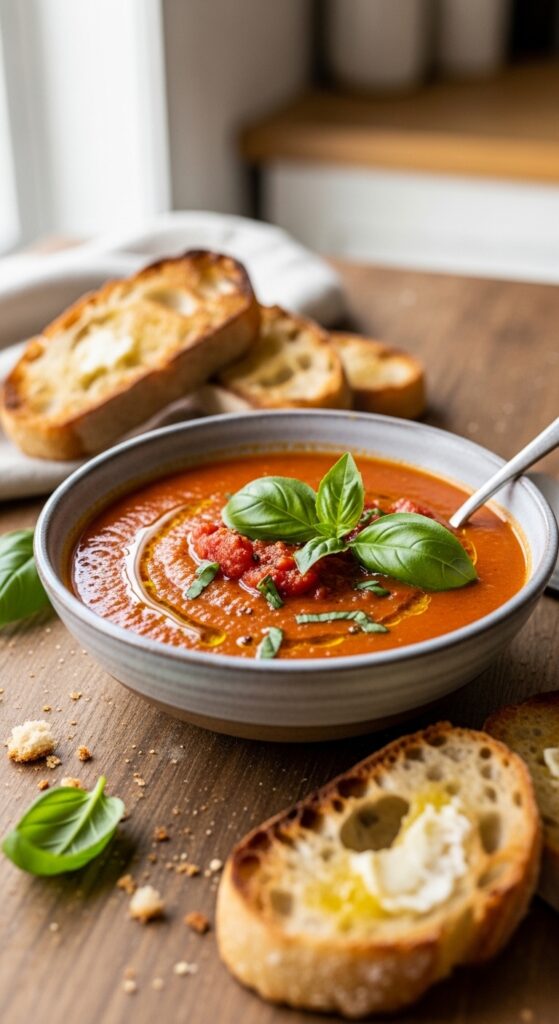
Perfect Pairings for Roasted Tomato Soup
Soup rarely stands alone. Pairings elevate the entire meal. Ever dipped crispy bread into rich tomato soup? Pure happiness.
Fantastic companions include:
- Grilled cheese sandwich
- Crusty artisan bread
- Garlic toast
- Simple green salad
Classic combinations exist for good reason. They simply work.
Storage and Leftover Strategy
Roasted tomato soup stores beautifully. Flavors deepen overnight. I sometimes prefer next-day soup. Weird? Maybe. Delicious? Absolutely.
Store in airtight containers for 3–4 days. Reheat gently. Add splash of broth if thickness increases. Freezing also works wonderfully.
Future-you will feel grateful.
Homemade vs Store-Bought: Honest Comparison
Store-bought soup offers convenience. Homemade soup offers flavor, control, and satisfaction. Which sounds more appealing?
Homemade advantages:
- Richer taste
- No mystery additives
- Custom seasoning
- Better texture
Extra effort remains minimal. Rewards remain massive.
Budget-Friendly Yet Impressive
Roasted tomato soup feels fancy but costs very little. Tomatoes, onions, garlic all inexpensive staples. Roasting amplifies value dramatically.
Few dishes deliver this level of comfort at such low cost. Perfect for tight budgets or lazy evenings. Smart cooking feels deeply satisfying.
Making It Extra Cozy
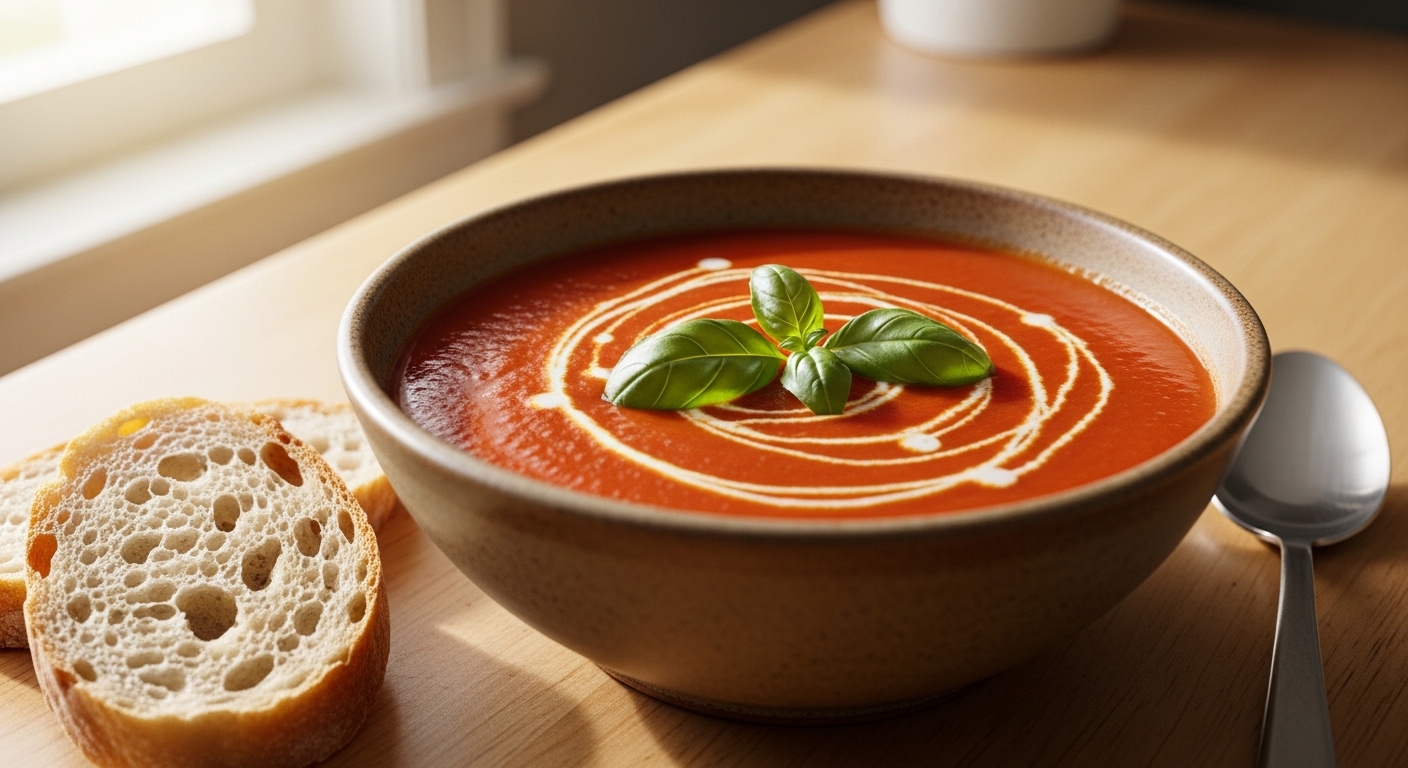
Want café vibes at home? Small presentation tweaks change everything. Food tastes better when it looks inviting.
Try:
- Warm bowls
- Cream swirl garnish
- Fresh herbs on top
- Rustic bread on side
Tiny effort, major visual upgrade. Dining becomes an experience.
Final Thoughts
Roasted tomato soup checks every box. Simple preparation, deep flavor, incredible aroma, comforting texture. Hard to dislike anything here.
You roast vegetables. You blend. You enjoy. No complicated techniques. No culinary stress. Just pure, cozy satisfaction.
So next time you crave warmth in a bowl, skip the canned stuff. Roast those tomatoes, trust the process, and savor every spoonful. Your kitchen will smell amazing, your taste buds will celebrate, and honestly, you’ll wonder why you didn’t try this sooner.