Hearty Vegetable Beef Soup Recipe for Cozy Nights
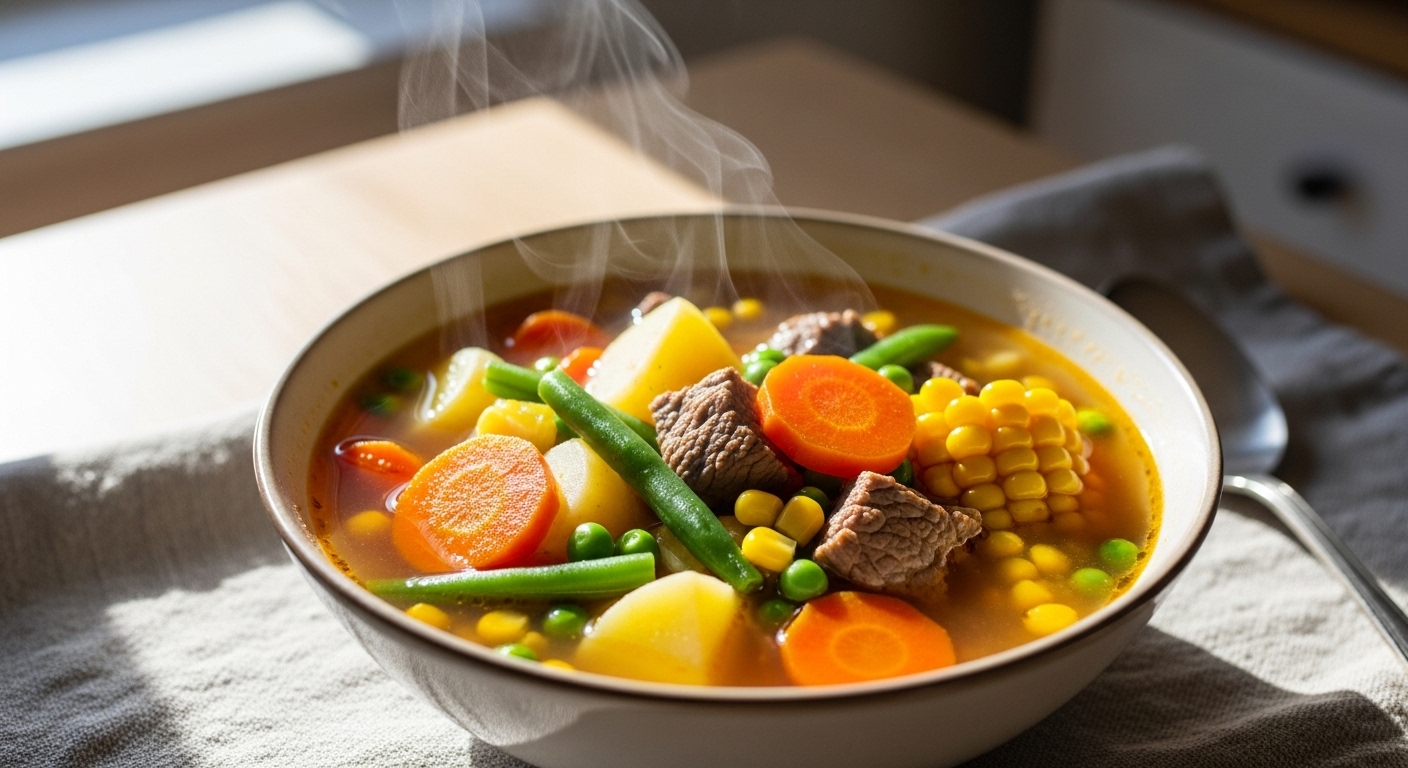
Let’s talk about comfort food for a second. You know that magical dish that fixes cold days, long weeks, and questionable life decisions? Yep vegetable beef soup proudly wears that crown. I cook this soup whenever I crave something hearty, cozy, and ridiculously satisfying, and honestly, it never disappoints.
Have you ever tasted a soup that feels like a warm hug? That’s exactly what this recipe delivers. Rich broth, tender beef, colorful vegetables everything works together like a perfectly cast movie. Stick with me, and I’ll walk you through a version that tastes amazing without turning your kitchen into a disaster zone.
Why Vegetable Beef Soup Never Gets Old
Some meals lose their charm after a few rounds. This soup? Not a chance. Vegetable beef soup stays timeless because it balances flavor, texture, and nourishment without trying too hard.
Every spoonful gives you something interesting. One bite delivers savory beef, the next bursts with sweet carrots or earthy potatoes. Doesn’t variety make eating more fun?
I also love how adaptable this soup feels. You can tweak ingredients endlessly, yet the result still tastes fantastic. That kind of flexibility saves dinner plans more often than people admit.
What Makes a Great Vegetable Beef Soup?
Not all soups deserve applause. Some taste bland, others feel greasy, and a few just confuse everyone at the table. A truly great vegetable beef soup recipe nails a few key elements.
Flavor Comes First
The broth drives everything. Bland broth leads to boring soup, no matter how many vegetables you toss in. I always build layers of flavor from the start.
Good soup flavor usually depends on:
- Properly browned beef
- Aromatic vegetables like onion and garlic
- Enough seasoning throughout cooking
- Patience (yes, that matters)
Rushing the process ruins depth. Why sabotage your own meal?
Texture Matters More Than You Think
Soup should feel satisfying, not watery or mushy. You want tender beef, soft vegetables, and a broth that feels rich without turning heavy.
Overcooking vegetables kills their personality. Undercooking them feels equally tragic. Finding that sweet spot makes a huge difference.
Choosing the Right Beef (Super Important)
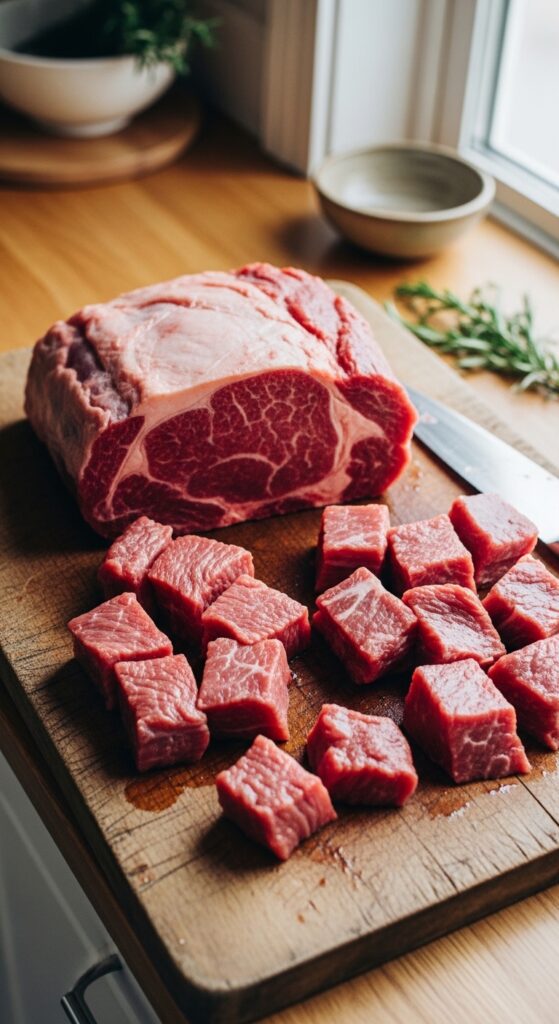
Let’s clear something up right away. Random beef chunks rarely produce outstanding soup. The cut of beef dramatically affects flavor and tenderness.
I usually reach for chuck roast. It cooks beautifully, turns tender, and adds serious richness. Stew meat works too, but quality varies wildly.
Great soup beef options include:
- Chuck roast (my favorite)
- Beef shank
- Short ribs
- Well-marbled stew meat
Lean cuts sound healthy but often taste dry and sad. Nobody celebrates dry soup beef.
Vegetables That Truly Shine in This Soup
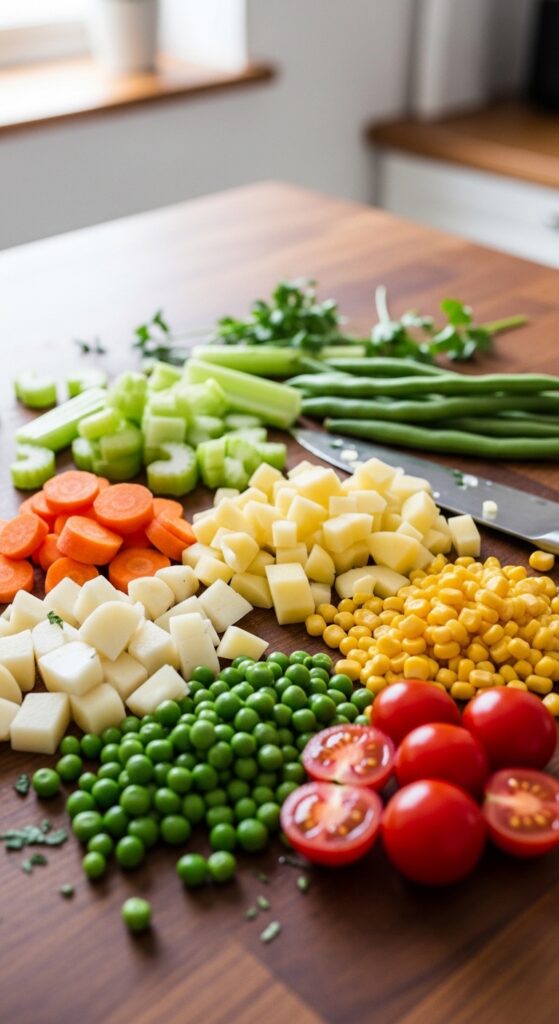
Vegetable beef soup invites creativity, yet some vegetables consistently steal the show. I stick to a reliable combination that delivers both flavor and color.
Classic soup vegetables include:
- Carrots
- Potatoes
- Celery
- Green beans
- Corn
- Peas
- Tomatoes
Each vegetable adds something unique. Carrots bring sweetness, potatoes add body, celery contributes subtle freshness. Isn’t it wild how simple ingredients create complexity?
Frozen vegetables work perfectly fine, by the way. I use them constantly, and the soup still tastes amazing. Convenience sometimes wins.
Essential Ingredients for Vegetable Beef Soup
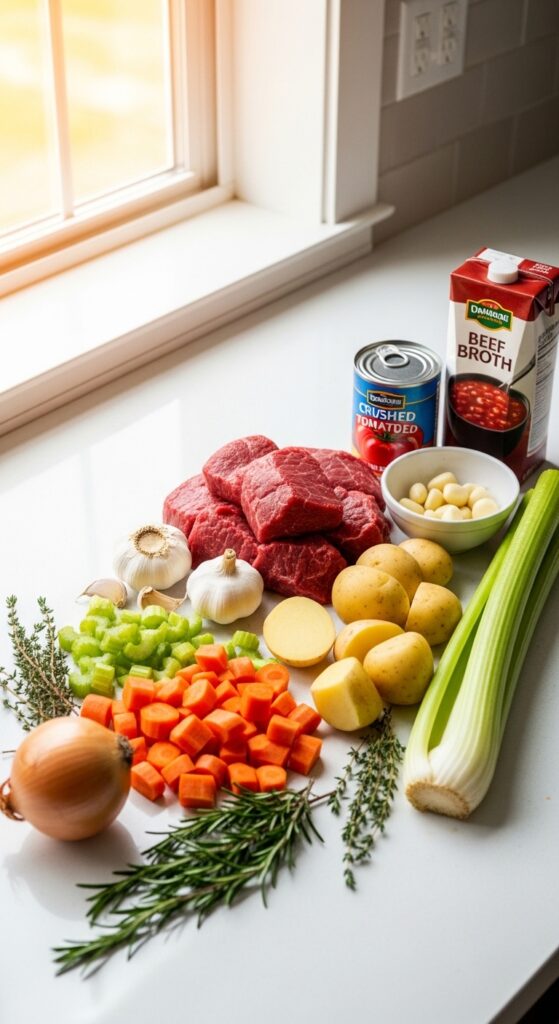
Before we start cooking, let’s organize everything. Scrambling mid-recipe drives me insane, so I gather ingredients first.
Here’s what you’ll need:
- 500–700g beef (chuck roast preferred)
- 2 carrots, chopped
- 2 potatoes, diced
- 2 celery stalks, sliced
- 1 onion, chopped
- 3 garlic cloves, minced
- 1 cup green beans
- ½ cup corn
- ½ cup peas
- 1 can diced tomatoes
- 6–8 cups beef broth
- Salt and pepper
- Olive oil
- Optional herbs (thyme, bay leaf, parsley)
Simple list, right? No exotic nonsense, no mysterious ingredients hiding in specialty stores.
Step-by-Step Cooking Process
Cooking this soup feels surprisingly relaxing. The steps follow logic, and the kitchen smells incredible along the way.
Step 1: Brown the Beef
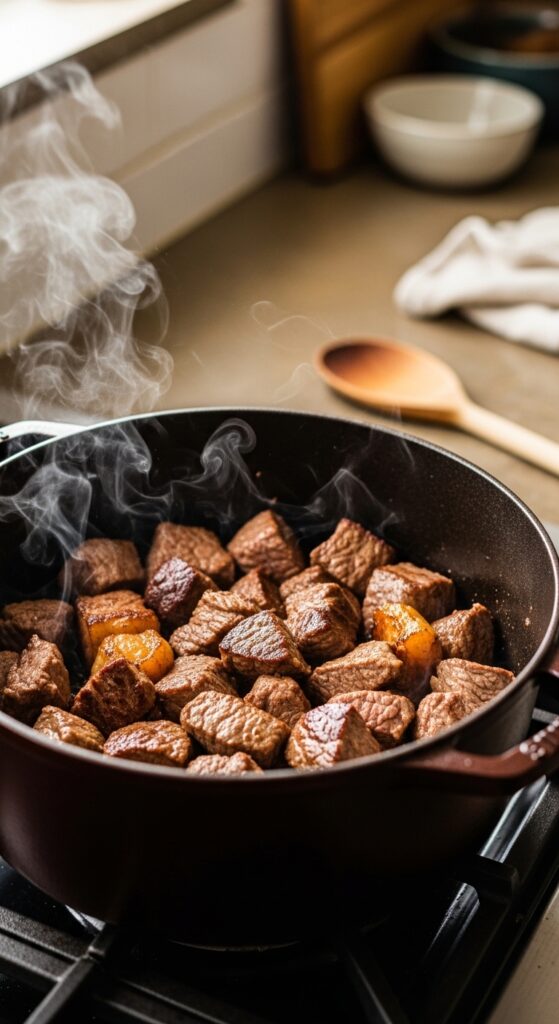
Heat olive oil in a large pot. Add beef chunks and brown them properly. Don’t rush this part.
Browning builds deep flavor. Skipping it produces dull soup — trust me, I learned the hard way.
Cook until you see:
- Golden edges
- Rich aroma
- No gray, sad-looking meat
Patience pays off immediately.
Step 2: Add Aromatics
Toss in onions and garlic. Stir everything together. Let those flavors mingle.
The pot should smell amazing now. If it doesn’t, something went terribly wrong :/
Cook until onions soften and release sweetness. Burnt garlic ruins moods and soups equally fast.
Step 3: Build the Broth
Pour in beef broth and diced tomatoes. Stir gently. Scrape the bottom of the pot.
Those browned bits hold pure gold. They boost flavor without extra effort. Why waste them?
Bring everything to a gentle simmer.
Step 4: Introduce Vegetables
Add carrots, potatoes, and celery first. These vegetables need more time. Later, add green beans, corn, and peas.
Layering vegetables prevents mushiness. Dumping everything together creates chaos.
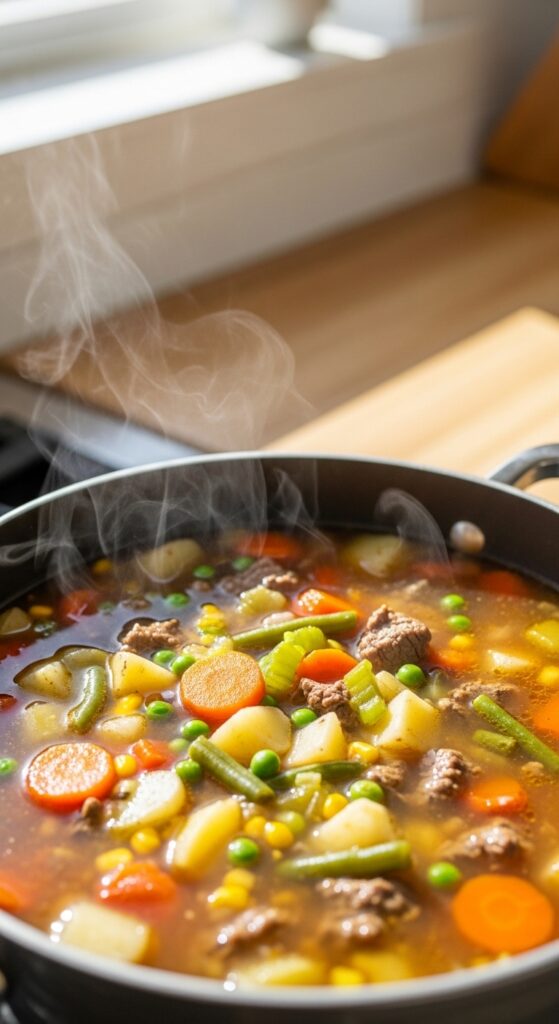
Simmer until vegetables soften but keep shape. Nobody enjoys vegetable paste disguised as soup.
Step 5: Season Properly
Add salt, pepper, and herbs gradually. Taste frequently. Adjust confidently.
Underseasoned soup tastes forgettable. Overseasoned soup shocks everyone. Balance wins.
IMO, seasoning transforms good soup into unforgettable soup.
Common Mistakes That Wreck Soup
I’ve made every possible soup mistake. Experience teaches brutal lessons, but it also saves future meals.
Avoid these disasters:
- Boiling aggressively instead of simmering
- Adding vegetables too early
- Using weak broth
- Ignoring seasoning
Soup demands gentle cooking. Aggressive heat toughens beef and destroys texture. Why fight your ingredients?
Ways to Boost Flavor Instantly
Sometimes soup tastes good but not mind-blowing. A few small tricks elevate everything.
Quick flavor boosters include:
- A splash of Worcestershire sauce
- Fresh herbs at the end
- A squeeze of lemon juice
- Extra black pepper
Tiny adjustments create noticeable impact. Flavor tuning feels almost magical.
Making It Thicker or Lighter
Preferences vary wildly. Some people love thick, stew-like soup. Others prefer lighter broth.
To thicken soup:
- Mash a few potatoes
- Add less broth
- Simmer longer
To lighten soup:
- Add more broth
- Reduce starchy vegetables
- Shorten cooking time
Flexibility keeps cooking fun, doesn’t it?
Storage and Leftover Magic
Here’s a fun fact. Vegetable beef soup often tastes better the next day. Flavors deepen overnight.
Store soup in airtight containers. Refrigerate for up to 4 days. Freeze for longer storage.
Reheating works easily. Gentle heat preserves texture and flavor. No complicated rituals required.
Why Homemade Soup Beats Store-Bought Every Time
Canned soup serves convenience, but homemade soup dominates flavor. No contest.
Homemade soup offers:
- Control over ingredients
- Better freshness
- Customizable seasoning
- Superior texture
Store versions often overload sodium and still taste bland. How does that even happen?
Nutritional Perks (Without Boring You)
This soup delivers serious nutritional value without screaming “health food.” That’s a win.
You get:
- Protein from beef
- Fiber from vegetables
- Vitamins from fresh ingredients
- Satiety that lasts for hours
Hearty food doesn’t need guilt. Balance feels refreshing.
Customization Ideas for Adventurous Cooks
Feeling creative? Great. Vegetable beef soup welcomes experimentation.
Fun variations include:
- Adding barley or pasta
- Using sweet potatoes
- Incorporating mushrooms
- Introducing mild spices
Small tweaks create entirely new personalities. Cooking never gets boring.
Final Thoughts
Vegetable beef soup delivers everything you want from comfort food. Rich flavor, satisfying texture, endless flexibility what’s not to love?
You can cook this recipe on busy weeknights or lazy weekends. The process feels forgiving and rewarding. Isn’t that exactly what home cooking should feel like? 🙂
Next time cold weather hits or cravings attack, grab a pot and make this soup. Your kitchen will smell incredible, your stomach will thank you, and leftovers will quietly become tomorrow’s highlight.