Authentic Pho Soup Recipe: Homemade, Flavorful & Easy to Make
Let’s be honest for a second there’s something magical about a bowl of pho that just hits the soul, right? I mean, the rich, aromatic broth, tender slices of meat, and perfectly soft rice noodles it’s basically a hug in a bowl. If you’ve ever wondered why pho has become such a global obsession, stick around, because I’m about to take you on a delicious, slightly messy, totally cozy journey into making your own pho soup recipe at home.
I’ve spent years experimenting with pho, tweaking the spices, the simmer times, and even how I slice the beef, and let me tell you: once you nail it, there’s no going back to takeout. I’m talking about a bowl that smells like a Vietnamese street market in your kitchen, without the chaos of motorbikes and street vendors (trust me, your neighbors will thank you).
What Makes Pho So Special
Pho isn’t just soup it’s an experience. The balance of flavors, textures, and aromas is what keeps people coming back for more. Here’s why I think pho deserves a special spot in your recipe rotation:
- Broth is everything: The deep, savory, slightly sweet broth infused with spices is what sets pho apart.
- Noodles matter: Soft yet slightly chewy rice noodles create that satisfying texture.
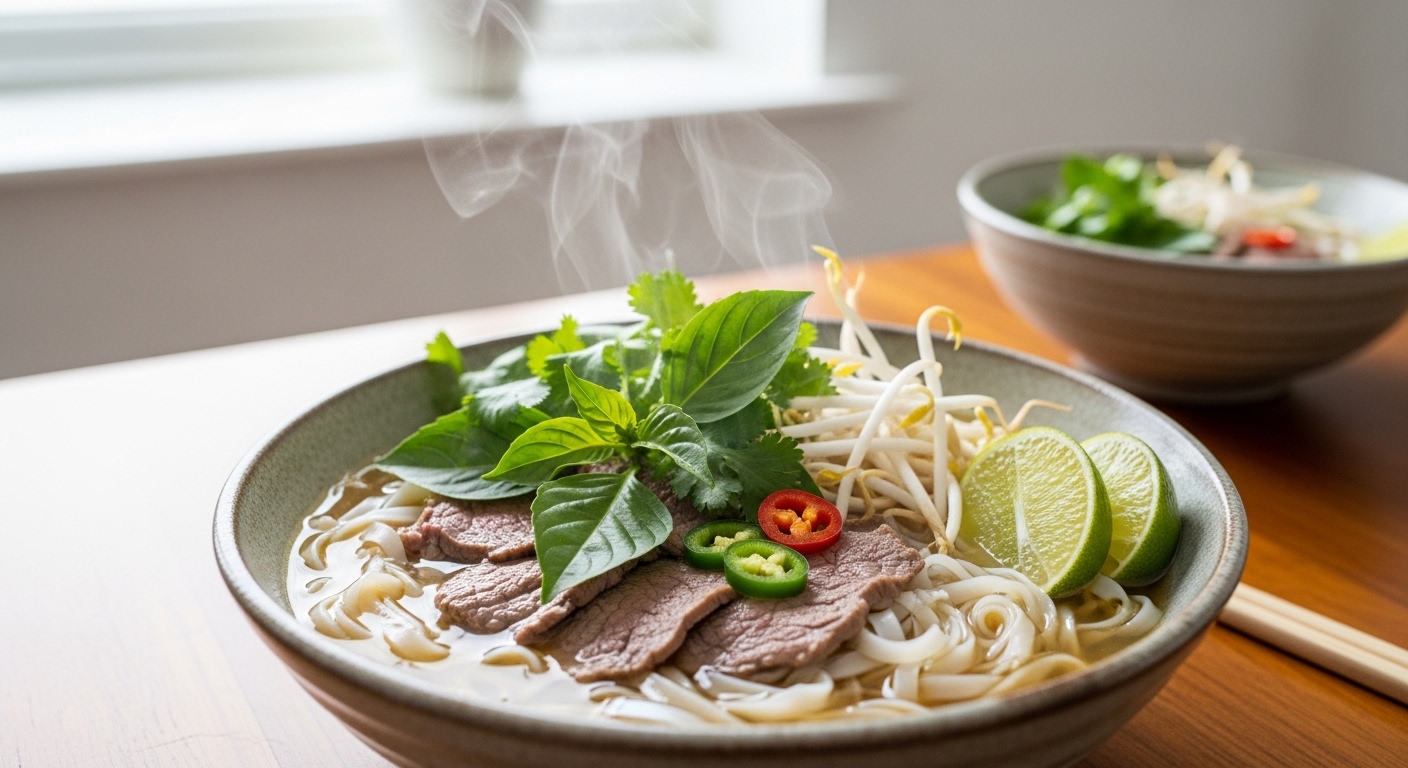
- Fresh herbs elevate: Bean sprouts, Thai basil, cilantro, and lime bring brightness to every bite.
Ever noticed how a simple squeeze of lime can make the whole bowl sing? Yeah, that’s the kind of magic we’re chasing here.
Choosing Your Ingredients
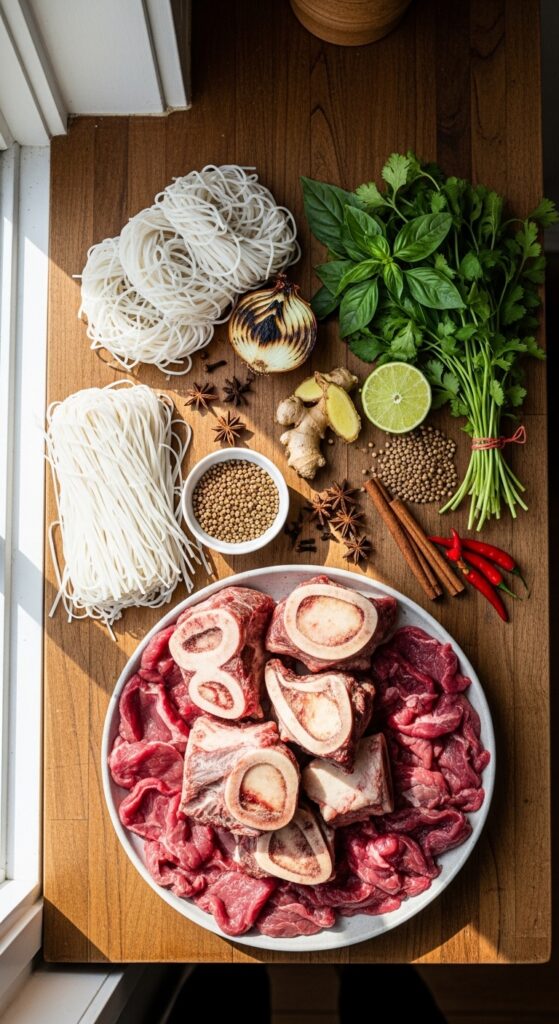
Pho is deceptively simple on paper, but it shines when you pick the right ingredients. Here’s my go-to list:
- Meat: Beef brisket, flank steak, or even chicken if you prefer a lighter version.
- Noodles: Fresh rice noodles work best, but dried ones are fine if you soak them properly.
- Spices: Star anise, cinnamon sticks, cloves, coriander seeds, and cardamom.
- Aromatics: Onion and ginger, roasted to perfection.
- Garnishes: Lime wedges, bean sprouts, Thai basil, cilantro, sliced chili, hoisin, and sriracha.
FYI, the roasted aromatics are what give pho that irresistible smoky-sweet undertone. Don’t skip it, even if you’re in a rush.
Roasting Aromatics and Spices
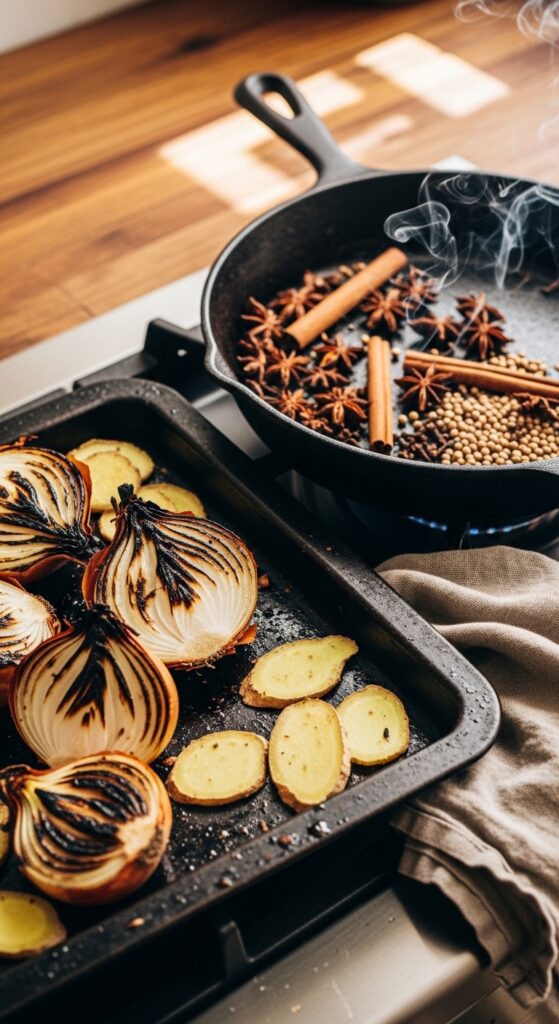
This step might seem extra, but it’s the backbone of your broth.
- Char the onion and ginger over an open flame or under a broiler until lightly blackened. This adds smokiness without overpowering the broth.
- Toast the spices in a dry skillet until fragrant. Star anise, cloves, cinnamon, and coriander seeds smelling them waft through your kitchen is pure therapy.
Ever wondered why some pho tastes bland? Usually, people skip this step. Trust me, it’s worth the two extra minutes.
Building the Broth
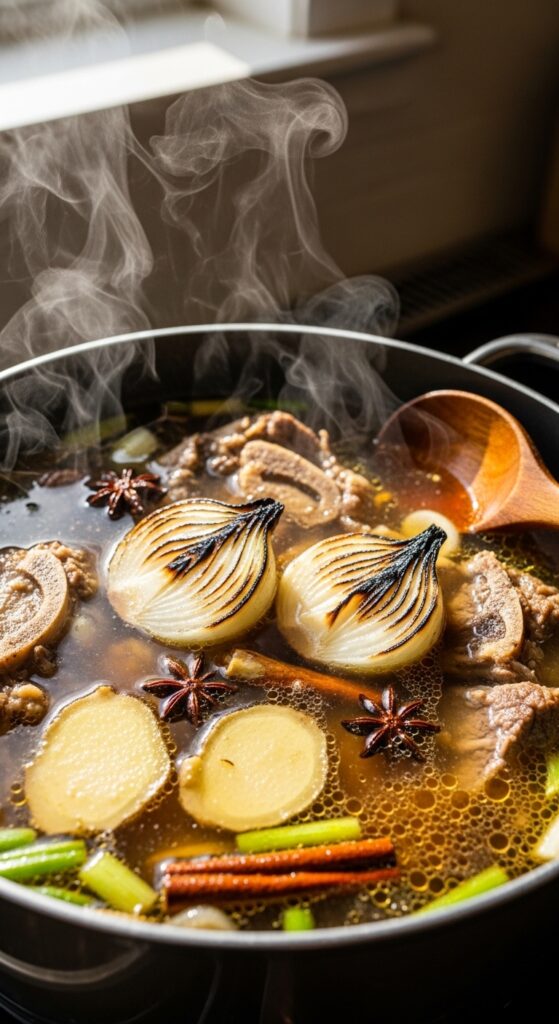
Here’s where the magic happens.
- Start with beef bones (or chicken bones for a lighter broth). Simmer gently in water for at least 4–6 hours. Yes, patience is key, but it’s so worth it.
- Add roasted aromatics and toasted spices halfway through simmering.
- Skim impurities off the top to keep the broth clear.
The result? A golden, fragrant broth that tastes like a Vietnamese street stall but without the street chaos.
Preparing the Meat
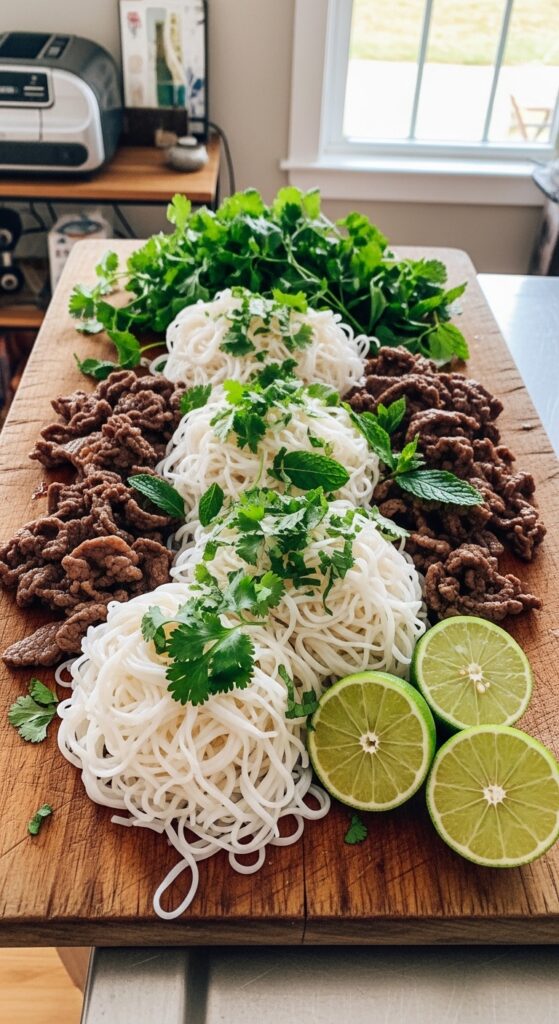
For authentic pho, the meat should be tender but not mushy.
- Brisket or flank steak: Slice thinly against the grain so it’s tender.
- Chicken: Poach gently in the broth, then shred.
- Optional quick-cook beef slices: You can briefly blanch or flash-cook them in the hot broth just before serving.
Ever tried slicing beef thinly and it still ended up chewy? Use a sharp knife, freeze the meat slightly for easier slicing, and thank me later.
Cooking the Noodles
Noodles can make or break pho. Here’s the trick:
- Fresh rice noodles: Blanch in hot water for 10–20 seconds until soft but still slightly chewy.
- Dried noodles: Soak in warm water until pliable, then briefly boil to finish.
Pro tip: Don’t overcook. Mushy noodles = sad pho.
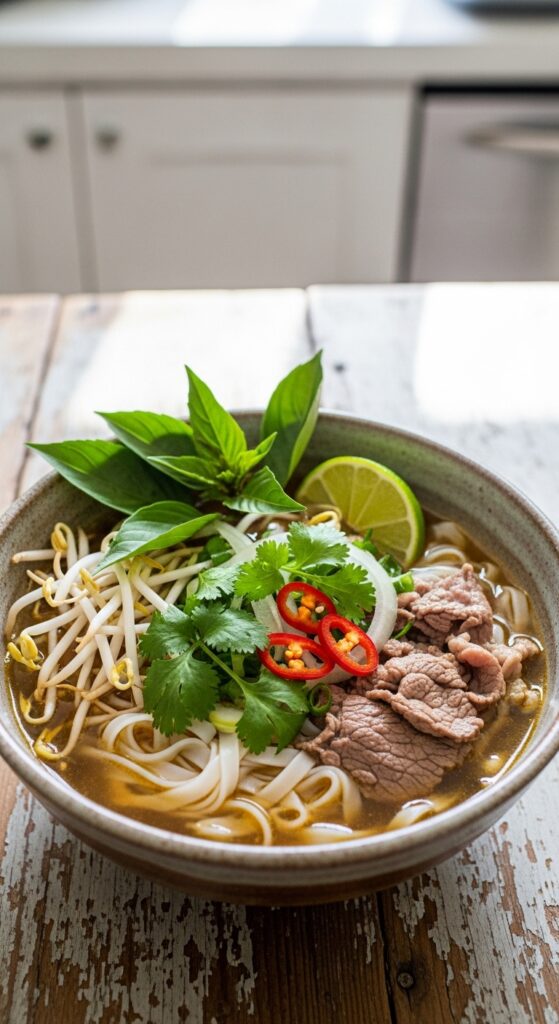
Assembling the Bowl
Here’s the fun part layering all your components into that beautiful bowl:
- Place softened noodles in the bottom.
- Arrange thin slices of beef or shredded chicken on top.
- Pour hot aromatic broth over everything to cook the meat perfectly.
- Add fresh herbs, bean sprouts, and lime wedges on the side.
- Optional: Hoisin sauce and sriracha for those who like a little heat or sweetness.
Ever poured broth over your noodles and watched the meat swirl and soften? That’s the satisfying “pho moment.”
Flavor Adjustments and Tweaks
Even a perfect pho broth benefits from a little tasting and tweaking:
- Salt: Adjust slowly, because the noodles and garnishes will add flavor too.
- Acidity: Lime juice brightens the soup instantly.
- Sweetness: A pinch of sugar balances the spices if needed.
- Herbs: Add fresh Thai basil or cilantro just before serving for maximum aroma.
These little tweaks can turn a good pho into a mind-blowing pho. IMO, the garnish and final seasoning step are just as important as the broth itself.
Common Mistakes to Avoid
Pho may seem intimidating, but it’s usually mistakes that trip people up:
- Boiling the broth aggressively – simmer gently for clarity.
- Skipping roasted aromatics – flavor falls flat.
- Overcooking noodles – mushy noodles = sad soup.
- Ignoring seasoning – taste as you go.
Ever had pho that was bland or just “meh”? One of these is probably the culprit.
Serving Suggestions
Pho is flexible. Here’s how to make your bowl feel extra special:
- Serve with extra lime wedges, bean sprouts, and chili slices on the side.
- Offer hoisin and sriracha for guests who like customization.
- Pair with a light Vietnamese iced tea or crispy spring rolls for a complete experience.
Trust me, presentation matters. A beautiful bowl of pho makes the whole meal feel elevated.
Storing and Reheating Pho
Pho is best fresh, but leftovers can work if done carefully:
- Store noodles separately from the broth to avoid sogginess.
- Keep the meat refrigerated for up to 2 days.
- Reheat the broth gently; pour over noodles and meat just before eating.
Ever tried reheating pho all in one pot? Meh. Keep components separate to preserve texture and flavor.
Vegetarian and Alternative Options
Not into meat? No worries:
- Vegetable broth base with roasted mushrooms and tofu works beautifully.
- Spices and aromatics remain the same, so you don’t lose the classic pho flavor.
- Add hearty veggies like carrots, daikon, or bok choy for texture.
Vegetarian pho can be just as satisfying, trust me.
Why Pho Is Comfort Food Gold
Pho hits all the comfort-food notes: warmth, texture, aroma, and flavor balance. Each spoonful is a mix of tender meat, soft noodles, and fragrant broth. Add fresh herbs and lime, and suddenly your soup feels fresh, bright, and comforting at the same time.
Ever notice how a good bowl of pho can make a gloomy day feel instantly better? That’s why I’ll never tire of making it.
Nutritional Benefits
Pho isn’t just delicious it’s nourishing:
- Protein from beef, chicken, or tofu
- Vitamins and minerals from fresh vegetables and herbs
- Hydration from the broth
- Low-fat and satisfying for a light yet filling meal
It’s basically a complete meal disguised as a delicate, flavorful soup.
Customizing Your Pho
Pho is a blank canvas:
- Swap proteins: shrimp, pork, or a mix of meats
- Experiment with spices: a touch of ginger, lemongrass, or star anise variation
- Add grains: rice noodles are classic, but glass noodles or zucchini noodles work for low-carb versions
The key is balancing flavors and textures. Your pho, your rules.
When to Make Pho
Pho works for:
- Cozy weeknight dinners
- Weekend brunch with friends
- Sick days or when you need a warm hug in a bowl
It’s versatile, impressive, and delicious every single time.
Tips From My Pho Experiments
After countless pho attempts, here’s what I swear by:
- Roast your aromatics and toast your spices. Don’t skip.
- Slice meat thinly for perfect tenderness.
- Simmer the broth slowly; patience pays off.
- Assemble bowls at the table so noodles don’t overcook.
- Offer garnishes on the side for a personal touch.
These small steps make a huge difference in flavor and presentation.
Final Thoughts
This pho soup recipe is approachable, flexible, and packed with flavor. It’s a bowl that comforts, nourishes, and impresses, whether you’re cooking for yourself, family, or friends.
Grab some bones, fresh meat, rice noodles, and aromatics, and let the magic happen. From the first sip to the last noodle, pho reminds us that the simplest ingredients, cooked with care, create something extraordinary.
Trust me, once you master this recipe, pho night will become a regular event in your kitchen. And the best part? Your home will smell like a bustling Vietnamese street market minus the motorbikes 🙂
Pho isn’t just soup; it’s a culinary experience, and now it’s yours to savor.