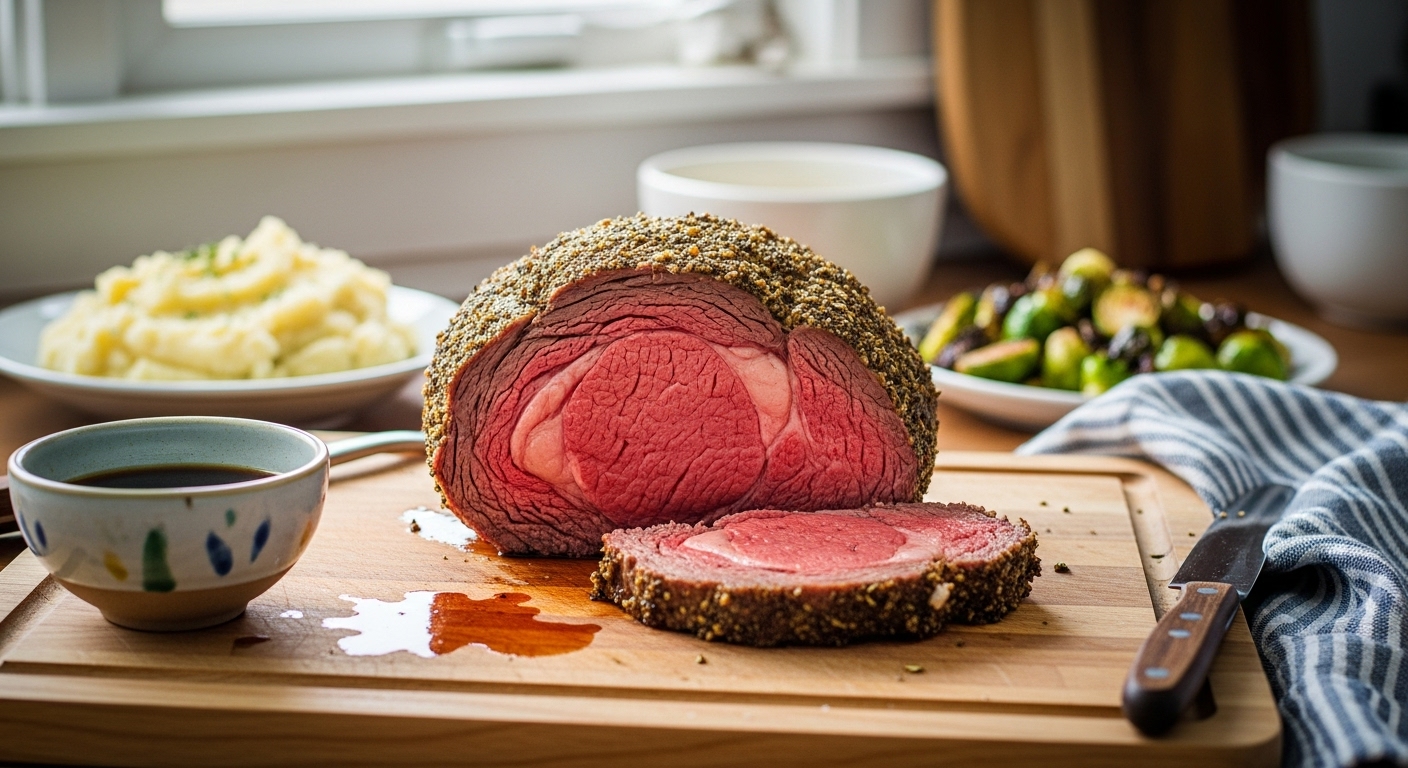
Prime Rib Roast Recipe That’s Juicy, Tender, and Foolproof
You know that moment when you bring a dish to the table and everyone suddenly goes quiet? That’s the power of a great prime rib roast recipe. I still remember the first time I nailed it juicy center, crisp crust, and a room full of people who suddenly treated me like a culinary wizard. Want that same reaction at your table? Let’s make it happen.
I’ll walk you through everything in a simple, friendly way. No chefy nonsense, no confusing jargon, just real talk and real flavor.
Why Prime Rib Always Steals the Show
Prime rib doesn’t just taste good. Prime rib feels like an event. People dress nicer, show up on time, and suddenly volunteer to do the dishes.
You get that magic because prime rib offers:
- Rich, beefy flavor that tastes luxurious without fancy tricks
- Tender texture when you cook it the right way
- Serious presentation value that makes dinner feel special
- Leftovers that actually excite you the next day
Ever noticed how people stop scrolling on their phones when you bring out a prime rib roast? That reaction never gets old.
What Makes a Great Prime Rib Roast Recipe?
A great prime rib roast recipe doesn’t rely on complicated steps. It relies on smart technique. You control temperature, seasoning, and timing, and the meat rewards you.
I always focus on three fundamentals:
- High-quality meat
- Simple seasoning that lets beef shine
- Proper cooking and resting time
Why overcomplicate something this naturally delicious?
Choosing the Right Cut of Prime Rib
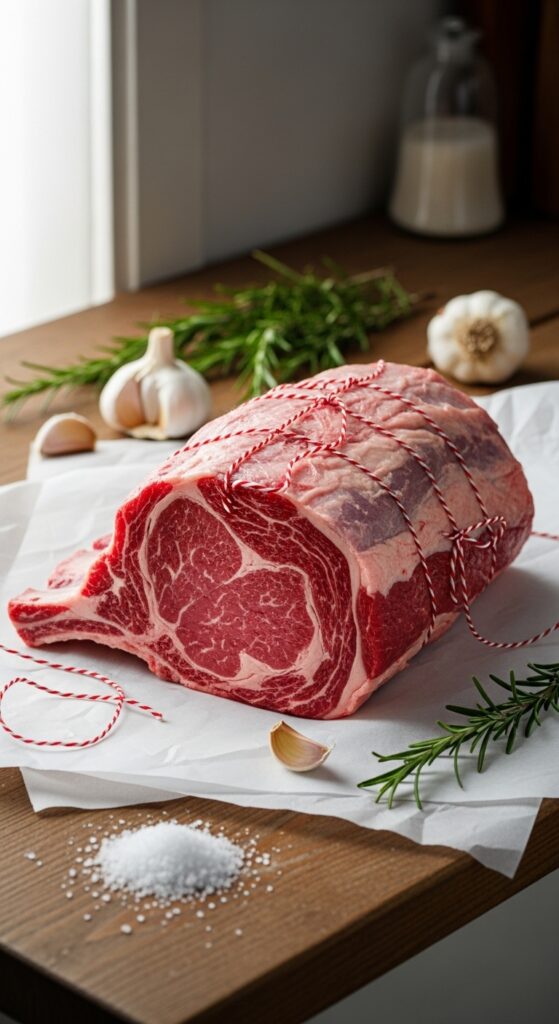
Picking the right roast sets you up for success. You don’t need to overthink it, but you should know what you’re buying.
Bone-In vs Boneless
Both work beautifully, but they behave slightly differently.
- Bone-in prime rib
- Adds deeper flavor
- Helps meat cook more evenly
- Looks dramatic on the table
- Boneless prime rib
- Easier to carve
- Cooks a bit faster
- Still incredibly tender
IMO, bone-in wins for special occasions, but boneless saves effort when you want stress-free cooking 🙂
USDA Grades Explained
You’ll see different labels at the butcher counter.
- Prime – Best marbling, most tender, highest price
- Choice – Great flavor, slightly less marbling, more affordable
- Select – Leaner, less juicy, usually not worth it
If you want that melt-in-your-mouth texture, go with Prime or high-quality Choice.
How Much Prime Rib Per Person?
This question trips people up. No one wants to run out of food, but no one wants leftovers for a week either.
Use this simple guide:
- Bone-in roast: 1 pound per person
- Boneless roast: ¾ pound per person
Hosting big eaters? Add a little extra. Feeding light eaters? You can stretch it. Ever watched someone claim they’ll eat a small portion and then go back for seconds? Yeah, plan for that.
Ingredients for the Perfect Prime Rib Roast
You don’t need a long grocery list. You need the right basics.
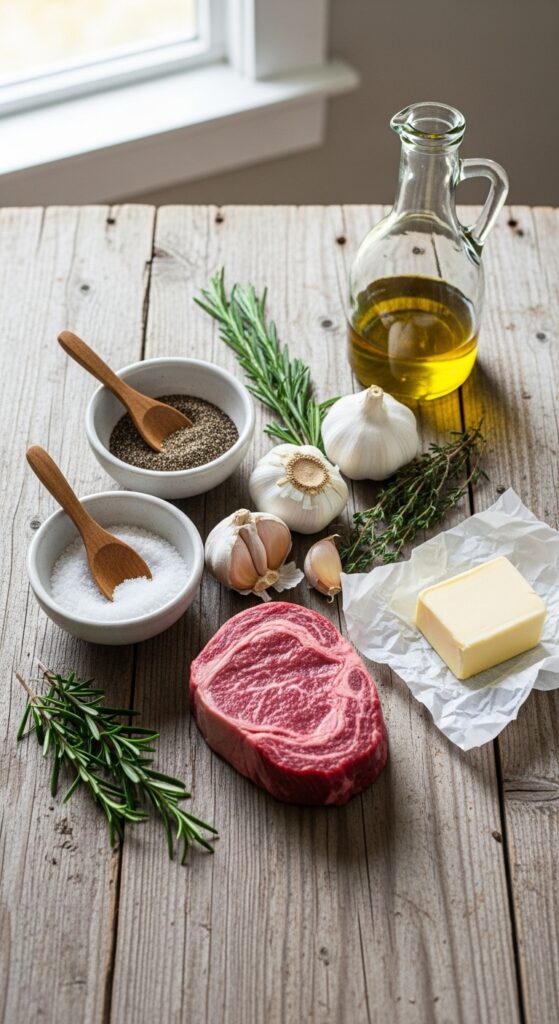
Here’s what I use every single time:
- Prime rib roast (bone-in or boneless)
- Kosher salt
- Freshly cracked black pepper
- Garlic (fresh cloves or garlic powder)
- Fresh rosemary
- Fresh thyme
- Olive oil or softened butter
That’s it. No marinades, no sugar bombs, no complicated sauces needed to make the meat shine.
Why Simple Seasoning Works Best
Prime rib already carries bold flavor. When you pile on too many spices, you hide what makes it special.
I season generously with:
- Salt for deep flavor penetration
- Pepper for gentle heat
- Garlic for savory warmth
- Herbs for aroma and balance
Ever tasted prime rib that felt oddly bland despite heavy seasoning? That happens when cooks skip proper salting time.
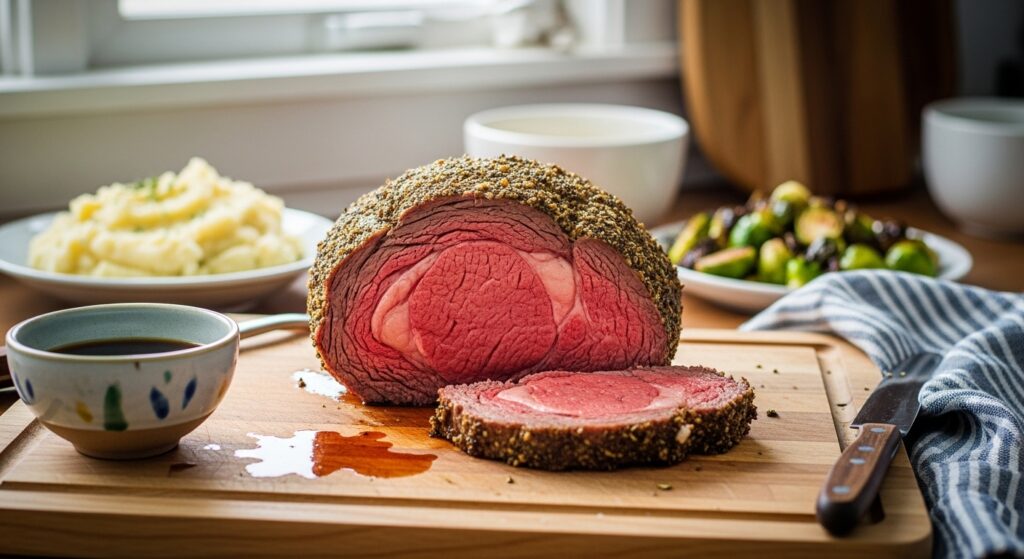
The Secret Weapon: Dry Brining
Dry brining changes everything. You salt the roast in advance and let time do the work.
I usually:
- Salt the entire roast generously
- Place it uncovered on a rack in the fridge
- Let it rest for 24 to 48 hours
This technique:
- Deepens flavor
- Improves tenderness
- Creates better crust
FYI, this step separates average prime rib from unforgettable prime rib.
Preparing the Roast Before Cooking
Don’t rush straight from fridge to oven. That move leads to uneven cooking.
Here’s my routine:
- Remove roast from fridge 1–2 hours before cooking
- Let it sit at room temperature
- Pat surface dry with paper towels
- Rub with olive oil or butter
- Coat evenly with seasoning and herbs
Why does this matter? Cold meat cooks unevenly, and no one wants a gray outer ring with a tiny pink center.
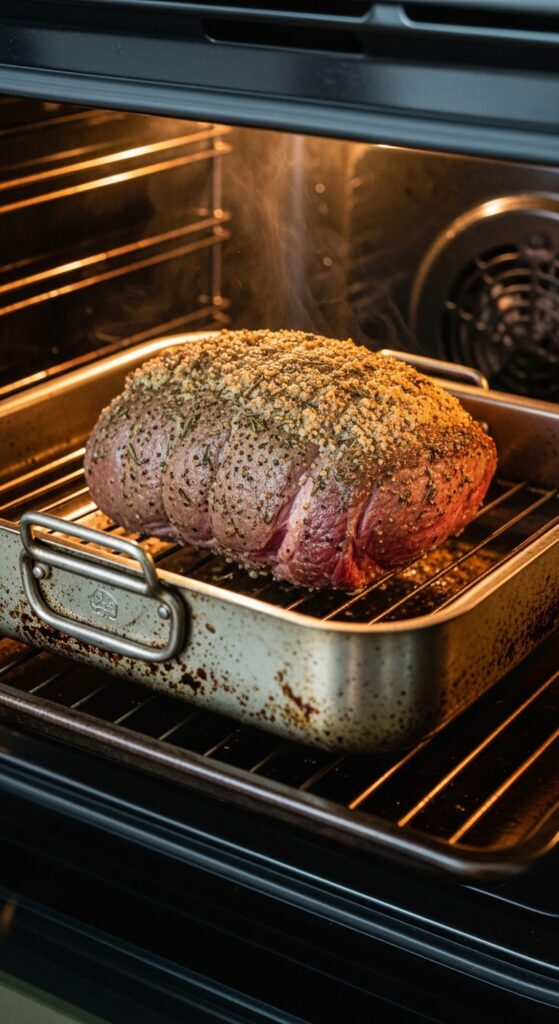
Oven Method: The Foolproof Way to Cook Prime Rib
I love this method because it works every time. You don’t need special equipment, just patience and attention.
Step-by-Step Roasting Method
Follow these steps closely:
- Preheat oven to 450°F (232°C)
- Place roast fat-side up on a rack in a roasting pan
- Roast at 450°F for 15–20 minutes to build crust
- Reduce oven temperature to 325°F (163°C)
- Continue cooking until desired internal temperature
This method gives you:
- Beautiful crust
- Even doneness
- Juicy interior
Ever cut into a roast and saw juices flood the board? That’s a good sign.
Internal Temperature Guide (Doneness Matters)
Guessing doneness leads to disappointment. Use a meat thermometer and trust the numbers.
Here’s the guide:
- Rare: 120–125°F
- Medium-rare: 130–135°F
- Medium: 140–145°F
- Medium-well: 150–155°F
I always aim for medium-rare. The texture stays buttery, and the flavor stays bold. Why cook an expensive roast until it feels like shoe leather?
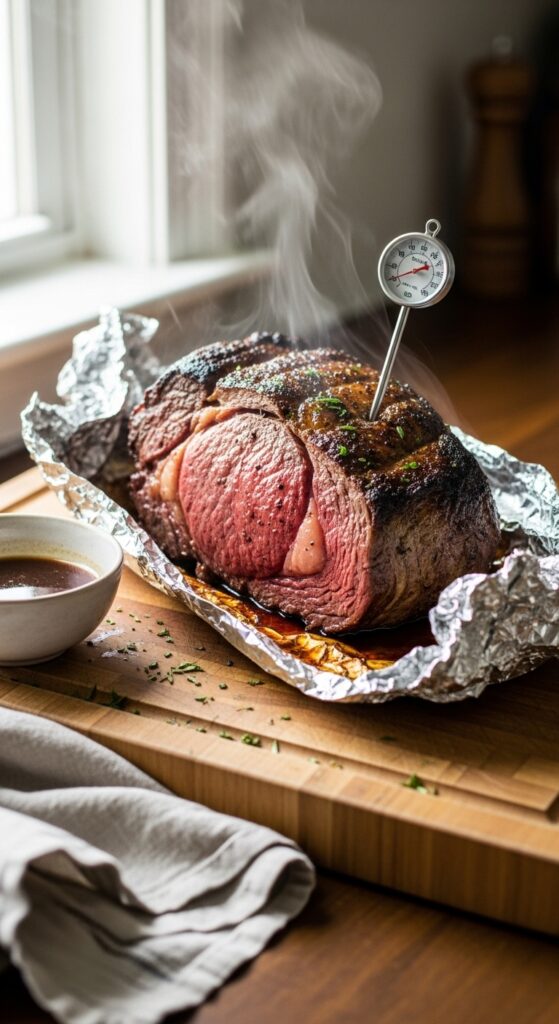
The Importance of Resting Your Prime Rib
This step tests everyone’s patience. It also makes or breaks your roast.
After cooking:
- Remove roast from oven
- Tent loosely with foil
- Let it rest for 20–30 minutes
Resting allows:
- Juices to redistribute
- Texture to relax
- Flavor to deepen
Skip resting, and you’ll watch precious juices spill out onto the cutting board. Painful, right?
How to Carve Prime Rib Like a Pro
Carving shouldn’t feel intimidating. You just need a sharp knife and calm energy.
For Bone-In Roast
- Slice along the bones to remove them
- Then slice the meat against the grain
For Boneless Roast
- Slice directly into thick or thin portions
- Always cut against the grain
I usually cut thick slices for dinner and thinner slices for leftovers. Everyone wins.
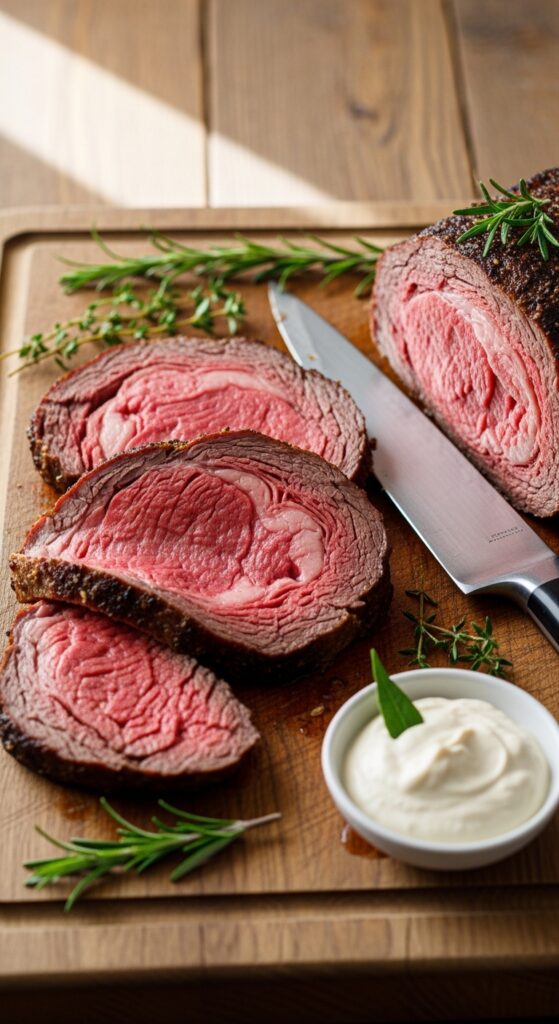
Classic Prime Rib Au Jus (Simple and Flavorful)
You don’t need heavy gravy to complement prime rib. A light au jus works perfectly.
Quick Au Jus Method
- Pour pan drippings into a saucepan
- Skim excess fat
- Add beef broth
- Simmer for 5–10 minutes
- Season with salt and pepper
This sauce:
- Enhances beef flavor
- Adds moisture
- Keeps the dish feeling elegant
Ever dipped prime rib into warm au jus and felt immediate happiness? Same.
Creamy Horseradish Sauce (Optional but Amazing)
Some people swear by horseradish with prime rib. I understand why.
Mix together:
- Sour cream
- Prepared horseradish
- Lemon juice
- Salt and pepper
This sauce adds:
- Tangy contrast
- Mild heat
- Extra depth
Not everyone loves it, but those who do really love it.
Best Side Dishes for Prime Rib
A strong prime rib roast recipe deserves great company on the plate.
My go-to sides include:
- Garlic mashed potatoes
- Roasted Brussels sprouts
- Creamed spinach
- Yorkshire pudding
- Simple green salad
You don’t need complicated sides. You need balance. Ever noticed how creamy potatoes make juicy beef taste even better?
Common Prime Rib Mistakes (And How to Avoid Them)
I’ve made these mistakes so you don’t have to.
Overcooking the Roast
Use a thermometer. Trust numbers, not vibes.
Skipping the Resting Time
Always rest your meat. Always.
Underseasoning
Prime rib needs bold seasoning. Don’t hold back on salt.
Cooking Straight From the Fridge
Let the roast warm slightly before cooking for even results.
Each mistake feels small, but together they ruin the experience.
Reverse Sear Method (Alternative Cooking Style)
Some cooks prefer reverse sear, and it works beautifully.
Here’s how it goes:
- Cook roast at 250°F (121°C) until near desired temperature
- Remove roast from oven
- Crank oven to 500°F (260°C)
- Sear for 10–15 minutes
This method gives you:
- Ultra-even doneness
- Perfect crust control
- Great results for beginners
I use this method when I want extra precision and zero stress.
Cooking Prime Rib for Holidays vs Regular Dinners
Prime rib feels like a holiday dish, but you don’t need to save it only for special dates.
Holiday Prime Rib
- Larger roast
- More elaborate sides
- Fancy presentation
- Longer resting and serving time
Casual Prime Rib Dinner
- Smaller roast
- Simple sides
- Relaxed vibe
- Still incredibly delicious
Why wait for December when you can enjoy a perfect roast in March?
Storing and Reheating Prime Rib Leftovers
Leftovers feel like a gift if you treat them correctly.
How to Store
- Wrap tightly in foil or airtight container
- Refrigerate for up to 4 days
How to Reheat Without Drying Out
- Place slices in a baking dish
- Add a splash of beef broth
- Cover with foil
- Warm at 275°F (135°C)
Microwaving works in emergencies, but slow reheating keeps the texture beautiful :/
Creative Ways to Use Leftover Prime Rib
Leftover prime rib might taste even better the next day.
Try these ideas:
- Prime rib sandwiches with horseradish mayo
- Steak and egg breakfast plates
- Prime rib tacos with fresh salsa
- Beefy pasta with garlic cream sauce
- Hearty beef and vegetable soup
Ever opened the fridge and felt excited about leftovers? That’s the prime rib effect.
Why This Prime Rib Roast Recipe Works Every Time
This recipe works because it respects the meat. You focus on temperature control, proper seasoning, and simple technique.
You get:
- Consistent results
- Deep beef flavor
- Tender, juicy slices
- Impressive presentation
You don’t need restaurant tricks when you understand the basics.
Prime Rib for Beginners: Yes, You Can Do This
Many people feel nervous about cooking expensive meat. I get it. I felt the same way at first.
Here’s the truth:
- Prime rib forgives minor mistakes
- A thermometer gives you control
- Simple seasoning keeps things easy
- Practice builds confidence quickly
Ever surprised yourself by pulling off a dish you thought felt “too advanced”? This can be that moment.
Hosting Tips When Serving Prime Rib
Cooking prime rib feels easier when you plan ahead.
My hosting tips:
- Prep sides early
- Set the table before guests arrive
- Let the roast rest while you chat
- Slice at the table for drama
People love watching the carving moment. Why not enjoy the spotlight?
FAQs
Can I cook prime rib without a roasting rack?
Yes, you can place thick onion slices under the roast to lift it slightly. The air circulation improves cooking.
Should I cover prime rib while roasting?
No, leave it uncovered to build that beautiful crust.
Can I use frozen prime rib?
Yes, but thaw it completely in the fridge before cooking. Never roast from frozen.
Do I need a fancy oven?
No, a standard home oven works perfectly when you manage temperature correctly.
Simple answers make cooking feel less intimidating, don’t they?
Final Thoughts on Mastering Prime Rib
Cooking the perfect prime rib roast recipe doesn’t require chef training. You need good meat, smart timing, and confidence in your process. You build flavor with simple seasoning. You protect juiciness with proper resting. You create wow-factor with thoughtful presentation.
The best part? You get to share something truly memorable with people you care about. So grab that roast, trust yourself, and enjoy the process. Who knows, maybe prime rib night becomes your new signature move.