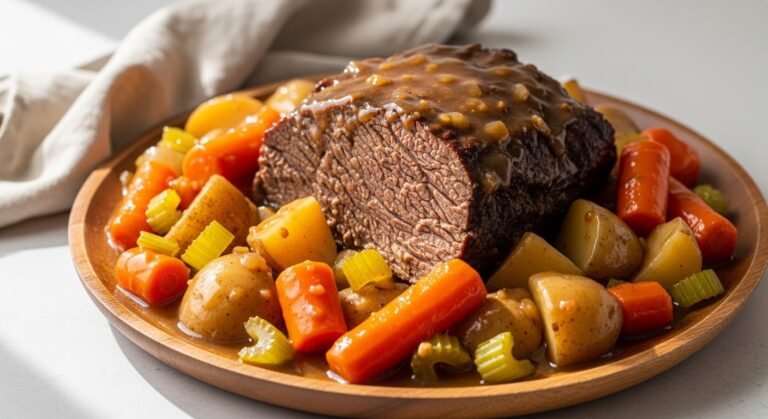

The Best Prime Rib Roast Recipe (Juicy & Easy for Holidays)
If you’ve ever dreamed of being crowned the ultimate dinner hero, let me tell you a perfectly cooked prime rib roast is your golden ticket. Seriously, nothing says “I’m a serious cook” like a juicy, tender prime rib with a crispy, flavorful crust. And yes, I’ve had my fair share of disasters trying to nail this before I finally figured out what actually works. But now? People practically bow when they see it come out of the oven.

Why This Prime Rib Roast Recipe Works Every Time
Cooking prime rib can feel intimidating, right? I get it there’s a lot of talk about “resting times,” “high heat sears,” and “internal temperatures.” But here’s the truth: once you understand the rhythm, this recipe is shockingly easy.
- Juicy interior: Thanks to slow roasting and careful monitoring.
- Crispy crust: Achieved with a simple herb-and-garlic rub.
- Perfectly seasoned: You’ll actually taste the beef, not just salt.
Ever wondered why restaurant prime rib tastes so perfect? It’s all about respecting the meat and letting it shine with minimal fuss.

Choosing the Right Prime Rib Roast
Bone-In vs. Boneless
I prefer bone-in prime rib for flavor. The bone acts like a natural oven within the meat, keeping it juicy and intensifying taste.
- Bone-in: Richer flavor, beautiful presentation, slower cooking.
- Boneless: Easier carving, slightly faster cook, but less dramatic flavor.
IMO, if you’re going for that wow factor at the dinner table, don’t skip the bone.
Size and Servings
A general rule: 1 pound per person if you’re serving hungry adults. If you want leftovers (and who doesn’t?), add a bit more.
- 4–5 pounds serves 4–5 people generously.
- 6–8 pounds for bigger gatherings.
I always round up leftovers make killer sandwiches the next day.

Ingredients for the Perfect Prime Rib Roast
Here’s what you’ll need to make magic happen:
- Prime rib roast (bone-in, 4–8 pounds)
- Kosher salt and freshly ground black pepper
- Garlic cloves, minced
- Fresh rosemary and thyme
- Olive oil or softened butter
- Optional: Dijon mustard for extra flavor boost
Simple ingredients, big impact. I promise the meat is the star here no heavy sauces necessary.

Preparing Your Prime Rib Roast
Step 1: Bring the Meat to Room Temperature
Take your roast out of the fridge 2 hours before cooking. Why? Cold meat cooks unevenly, and no one wants dry edges with rare middles.
Step 2: Season Generously
Rub the roast with olive oil or butter, then cover it with salt, pepper, garlic, and herbs. Be generous the crust is what everyone notices first.
Step 3: Preheat the Oven
Set the oven to 450°F (230°C) for the initial sear. This step locks in juices and starts forming that gorgeous crust.

Cooking Your Prime Rib Roast
High-Heat Sear
Place the roast, fat side up, in a roasting pan. Roast at high heat for 20–30 minutes to create a caramelized crust. You’ll hear that sizzle and smell heaven in the kitchen.
Low-and-Slow Finish
Reduce the oven to 325°F (165°C) and continue roasting until the internal temperature hits:
- Rare: 120–125°F (49–52°C)
- Medium-Rare: 130–135°F (54–57°C)
- Medium: 140–145°F (60–63°C)
I usually go medium-rare, which gives the most tender, juicy slices.
Resting Time
Here’s the part most people skip and regret it: rest your roast for 20–30 minutes before carving. This step allows juices to redistribute so every bite is perfectly moist.

Carving Your Prime Rib Roast
Carving prime rib is an art, but it’s simpler than it looks:
- Remove the bones if desired. Slice along the natural grain.
- Cut 1/2–3/4 inch thick slices. Too thin, and it dries; too thick, and it overwhelms.
- Arrange on a platter and drizzle with pan juices if you want extra oomph.
Pro tip: Use a sharp slicing knife. Dull knives tear the meat and ruin the presentation.
Flavor Variations and Rub Ideas
Want to mix things up? Try these simple tweaks:
- Garlic-Herb Crust: Classic combo of rosemary, thyme, and garlic.
- Spicy Kick: Add smoked paprika, cayenne, or chili flakes.
- Mustard-Glazed: Brush Dijon mustard over the roast before seasoning.
- Coffee-Crusted: Yes, coffee grounds enhance crust depth it sounds weird but works surprisingly well.
I rotate these occasionally to keep things exciting, especially around holidays.

Side Dishes That Pair Perfectly
Prime rib is the main event, but the right sides make the dinner unforgettable:
- Creamy mashed potatoes – obvious but essential.
- Garlic roasted green beans – simple and bright.
- Yorkshire pudding – because this is a classic combo.
- Horseradish cream sauce – optional but highly recommended.
- Roasted carrots or parsnips – adds color and sweetness.
FYI, I skip heavy sauces most of the time the roast doesn’t need it.
Common Mistakes to Avoid
Even experienced cooks mess up prime rib occasionally. Here’s what to watch for:
- Skipping the rest: You’ll lose juiciness.
- Cooking straight from fridge: Leads to uneven doneness.
- Overcrowding the pan: Airflow matters for crust formation.
- Using too much salt on the day of: I salt generously 24 hours ahead if possible; it acts like a dry brine.
Follow these tips, and you’ll rarely have complaints.

How to Store and Reheat Leftover Prime Rib
Leftovers = joy.
- Wrap slices tightly in foil or airtight containers.
- Refrigerate for up to 4–5 days.
- Reheat gently in a 300°F oven or in a covered skillet with a splash of beef broth.
Pro tip: Never microwave directly it dries the meat fast.
Why This Recipe Works for Holidays and Special Occasions
I’ve tested this prime rib roast recipe for Christmas, birthdays, and lazy Sunday feasts. It consistently impresses because:
- It’s visually stunning.
- It’s juicy and flavorful.
- It’s easier than most people think.
Honestly, it’s the type of recipe that makes you look like a pro without the stress.
FAQ About Prime Rib Roast
Q: Can I prep the roast the night before?
A: Absolutely! Season it, cover, and refrigerate overnight. Bring to room temperature before roasting.
Q: Can I use boneless prime rib?
A: Yes, but expect slightly less flavor and a faster cooking time.
Q: How do I know it’s done without a thermometer?
A: Press the meat rare feels soft, medium-rare slightly springy, medium firmer. But thermometer = guaranteed success.
Final Thoughts
Cooking a prime rib roast is more approachable than most people think. With a bit of preparation, a good crust, and careful temperature control, you get a juicy, flavorful centerpiece that makes any meal unforgettable.
So grab a roast, season generously, and let the oven do its magic. Your guests will be impressed, and honestly, so will you. And hey if anyone asks for the recipe, just smile knowingly :).